Edie Eicas: Aurora

Aurora, basket in hand and smelling of Brasso, had just finished her weekly clean of the golden plate that announced the house name, Hendun. It was a meditative job, the polishing, the day’s early ritual before summer’s heat overpowered. The weather prediction for the coming school holidays was storms, a release from the building humidity.

Opening the heavy front door, she turned at the sound of pounding feet. James had caught up to Fee. Then the scream as he pulled her pigtail, yanking her head back with such ferocity Aurora thought he’d snapped her neck. Mouth open, Aurora stood frozen in surprise as she met his eyes. The look he shot her before he turned to walk away was one of hate and challenge. She knew the look, the rabid dog, and it left her body bristling with fear.

The job was new and Aurora’s English limited, her communication was more a matter of hand gestures and nods.  Hoping the family would let her stay, she filled the space like a ghost, leaving her trace through beds made, and bathrooms cleaned. She had not expected this. The photographs littering the lounge room of a smiling family belied the malice she’d seen in the boy’s eyes.

Kneeling on the runner next to the sobbing, crumpled girl, she took her into her arms and whispered, ‘Cara, sei al securo. Sei al securo.’ The body thin, lacking meat sank into her arms. It was a jolt of connection and left its imprint on Aurora’s soul.

Nell Holland – The Book Launch

She was dressed completely in black leather. Black blouse open at the neck and a short, tight jacket straining at the bust. An equally tight mini skirt struggled to control her stomach, and the spike-heeled boots were thigh high.

From behind, she appeared a young woman with red tresses falling below her shoulders. Then she turned. Grey sprouted along the hairline.  The heavy makeup, filling the give-away lines of a heavy smoker, looked garish as we approached. But the coup-de-grace was the messily outlined eyes looking as if kohl had been applied the night before, slept in and ‘refreshed’ with a heavy hand.

As we got closer, Rose – this had been her idea – hissed, ‘Oh! My! God!’.

The vision stepped forward to greet Rose. ‘You came! Great.’

Then she tottered away on spike-heels, leaning forward to keep balanced.  She probably believed she looked sultry and enticing. She didn’t.

I was aghast, amused, and lost in thought. She reminded me of someone. Who? Oh yes! That ageing transvestite seen long ago on Singapore’s Bugis Street.

We found a table and choked with barely controlled mirth every time we caught each other’s eye.  Rose pleaded, ‘She didn’t look like that when she invited me to her book launch. I wonder what she’ll read?’

Within minutes we were enlightened.  What she announced as a sexy story, was revealed as hard-core pornography in the bedroom, the bathroom, on the grand piano and in a mirror-lined lift. That was chapter one. No foreword and little foreplay!

We left as the sex-quiz papers were being distributed and Rose had run out of variations on saying sorry. 

By then we needed a cleansing cuppa. But we kept looking at each other, wondering who’d cleaned the piano and spluttering into our tea.

What an educational afternoon!

Edie Eicas: Long-Range Weather Forecast

A Short Story

Lennox Walker’s long-range weather forecast held no joy. The Miller family looked despondently at one another recognising the reality they prayed for would not materialize. No rescue for the farm in the grip of drought, Walker’s predictions promised more of the same: the El Nino weather pattern had set in and things were going to get worse.

Kathy felt the tension between her parents as her father looked helplessly at the radio. His anxiety over his inability to control their future transmitted itself acutely. She knew they would face another lament as her father saw their history slipping from his grasp. Seeking relief, she opened the kitchen door and walked out onto the back veranda. Looking out to the stand of trees covered by the silver of a full moon, she reflected on her future; the farm, the only life she knew. Her heart ached over the changes that had stripped life from the land; gone the green, replaced with red; the soil parched and only the last, strongest plants holding onto hope. As she stood reflecting on her options, the wind, which had once brought relief, swirled around the homestead. Now a thief, it stripped more from the farm carrying with it yet another layer of top soil.

The weather on everyone’s lips meant constant questioning and filled the last six months with concern. All who crossed paths were interrogated over the possibility of a break in the drought. Information gleaned from every encounter and medium, stored for reference and shared later around the dinner table to add more to the ongoing theme: how to get the best out of what was left.

The stock cut back to the bare minimum; the family held the place together with just prayer. The boys had left long ago as the work diminished and tension mounted with their father. Only Kathy the youngest was left to help, but now, the future loomed dire leaving her no other decision but to find a job in the city. She knew it was time to leave the nest. At eighteen, her experience defined by the country surrounding her, and with few skills beyond the farm, she did not relish the move outside her sphere. But she knew she was one of many, the country diaspora, in search of new employment.

Through a network of friends and acquaintances, a room was provided in the city and the search for gainful employment begun. After a few false starts a position was found in the employ of a judge who sought a housekeeper.

Life had become chaotic for the judge. A fire had broken out in the house and an accident had left him with back pain, a dull constant ache reminding him of his loss of control. As his rein on order slipped from his grasp, his house also fell to the chaos surrounding him. His housekeeper had left and all who came to his employ, seemed to be but transient figures leaving within a couple of months of starting. Patience had deserted him, as age and pain brought out irritation and frustration and parts of his personality began to slip his grasp adding to the tension that now seemed to surround him.

Seeking help, he asked friends if they knew of someone interested in housekeeping. In asking the question, so appeared the answer, and an old friend made mention of Kathy and an interview arranged.

At first, the judge appeared sceptical an eighteen year old would be sufficiently mature to handle the responsibilities but, without another avenue, he dismissed the casual cleaners and explained her duties. Single and compulsive, he demanded the family mansion, too large for one living alone, be cleaned in a manner he prescribed. Over compensating for the chaos surrounding him, and by nature difficult, he detailed the specifics of his requirements. As they walked through the rooms, he pointedly looked at Kathy seeking confirmation she understood the importance of his demands. Nervous and repetitive, he showed through his attention to detail, his need for control; the label ‘anal-retentive’ given him behind his back meant to warn those in his employ.

The house, a shrine to the past, detailed the history of its predecessors though paintings, sculptures and furniture. Different rooms contained the signature of a particular individual who had claimed it as their own and, while little had changed in some rooms, others declared the imprint of technology and the toys the judge deemed useful for his existence. Walking Kathy through the house, commissioning his expectations, he hoped yet again, rescue was at hand. Dependent in this arena, he sought escape from the pressure of the house, and longed for the order of the past that seemed now to elude him.

The epitome of a ‘country girl’ solid, plain and mousey, Kathy appeared to exude an aura of competency as she followed him around asking questions and noting his demands. Leaving her with lists of contacts and expectations, he hoped this young girl could fulfil his requirements. Unconvinced, he felt he had little choice even though she came with glowing references: able, honest and competent.

At first, Kathy, frightened by his demeanour, provided all negotiated with a touch of anxiety but later, as she found her rhythm and the jobs became habits, apprehension relaxed its grip. As order stripped the dust from the corners, she began to explore. Curiosity and boredom led her to open the first cupboard in the kitchen. Although the surfaces had been dusted by a succession of cleaners, nothing behind closed doors had been touched. Pulling everything out to reorganise and clean, her methodical nature found an outlet. 

Slowly as time permitted, Kathy extended her range. As each room found order, she moved to the next and began again the challenge to install discipline in what appeared years of neglect. Each cupboard opened, revealed shelves stuffed to capacity. The judge’s history was crammed into any space he found available; belying the spurious order of the outside, the cupboards hid the disorder within.

As the months progressed, the judge witnessed a change. Books left in piles found their places back to the library shelves, and his CD collection now stood in alphabetical arrangement, the loose CDs finally in their covers. While the judge appreciated the arrangements that facilitated easy access and choice, later, offence grew at her gall at reorganizing other parts of his house.

Over time as she dusted and familiarity grew, Kathy began to move objects around the rooms; arranging them in groups by colour or theme. At first a small move, but as courage and initiative took hold, she became bolder. Photographs arranged on the sideboard were now themed by the silver of their frames and surrounded by slivers of silver in snuffboxes and letter openers. Other objects moved to groups more in tune with their subject matter.

A game of change and resentment brought the movement of pieces to and fro and, like a chess game, some pieces moved forward while others back. At first, the judge would return the items to their places, angry at her audacity. Then in frustration, he would remove the object from her grasp, hiding it in a cupboard or replacing it with another sculpture or piece of glass.

When Kathy grouped memorabilia related to horses on a table under the study window  ̶  a cup won, a photograph, a plaque and a whip – she came back to find  the whip removed and those items left, rearranged. As he reclaimed a room, she would shrug, vexed, but move on to where she could add her signature. Then, each night after one of her days in the house, when the judge returned, he would open the door and like a stalker, begin his search for her intrusion.

Although the tension mounted, the judge could not deny the impact Kathy made on his life. Order in his house allowed him some relief from the stress that seemed to dog him still. Things were easier to find as logic dictated where bits and pieces should be stored. Now the laundry and kitchen cupboards revealed their contents easily. Grouped and placed at his convenience, he found the batteries he sought, or the shoe polish he bought in bulk, as he misplaced yet another can.

His wardrobe now ordered by jackets, pants, suits and shirts, all cleaned and neatly colour coded, meant easy access to his clothes. Thus, the morning torture of choice made easier. Then, after a long day, as he stepped through the door to find the house pristine, glowing and ordered, pleasure would sweep over him and he would sink into the comforting feeling and relax. Unable to sack her, for although she intruded, she brought what had long evaded him, and so he moved to stoically accept her as a necessary evil in his life.

Later, as he saw the complement in design or colour she offered, he would return the piece he had snatched earlier, or add another acknowledging awareness of the style she was imposing. Theirs became a game that eventually subsided into a dance of display. As she moved and he moved pieces around, they finally found creativity and new pleasure in the juxtaposition of shape, colour or composition.

Notes left commented on arrangements, and allowances made that she offer more to his environment. Flowers found their way into bowls and vases as the garden came into her providence. Slowly order crept further afield and soon the judge too became more a participator in the transformations.

As spring heralded change, so he too brought his interest back to the house and a gardener given instruction to add colour to parts long overlooked. Inspired, the judge purchased new pieces of art and Kathy, watching from afar and enveloped in proprietorial pleasure, shared his delight in his home.

Change also brought Kathy the need to spring clean further, and she began to dig into the judge’s personal sphere. The spare bedroom he used at different times for visitors now targeted and the drawers emptied into the middle of the room. Hidden amongst the detritus she found a series of magazines. Looking to categorize them and place them in his library, Kathy opened one to find herself confronted by the performance of a porno starlet.

In shock and blushing, she quickly stacked the magazines and, looking over her shoulder, returned them to the back of the drawer. Where the farm had taught her independence, as situations could change dramatically, she now regretted the liberty taken. Caught by embarrassment, feeling vulnerable and privy to too much, she wished she had never started. Having grown up with two older brothers, she wondered at her response.

From the moment of discovery, the relationship between herself and her employer took another turn. Caught by the knowledge that a darker side lurked in his life, that he was more than the one-dimensional figure that imposed himself upon the vignettes she arranged, she suddenly felt his presence. Where once she ranged free in the house now his presence intruded, and the judge’s secret and personal side became a siren song to Kathy.

Piqued, she gave more attention, not to the art, but now the judge’s private life came under scrutiny. Details once overlooked became a source for speculation. Cups that appeared over the weekend and littered the kitchen were checked for lipstick marks before being deposited into the dishwasher. Then, before vacuuming, she would check the thick pile of the carpet looking for heel marks in the different rooms.

A compulsive element began to impose itself as she watched for signs of women entering the judge’s domain. Soon, she noted further intrusions that suggested intimacies. Irritated, she jealousy judged the signs of his feminine encounters. Slowly a possessive quality came into play, and each time Kathy entered the house, she became the stalker checking for signs of intrusion.

Disorder once again became a part of the judge’s life, this time one equated with pleasure and not chaos. The house became the judge’s stage as he sought to seduce those who crossed his threshold. The changing spectacle announced a succession of women entertained by the judge. Some came and went, just sexual sport and gone quickly. Others lingered, and ever hopeful, would leave a calling card, something personal, but not too expensive in the hope of returning to collect the ‘forgotten’ item. Finding these declarations of possession, and feeling offended, Kathy threw them into the rubbish bin.

While cleaning up after one of the judge’s busy weekends, the phone rang and, preoccupied, she answered. Greeted by a woman’s voice enquiring after the judge brought Kathy to attention. Suggesting the woman ring his chambers, Kathy also asked if there was any message. Replacing the phone and annoyed by the confidence in the woman’s voice, Kathy moved about the house unsettled and uncomfortable.

Stomach churning and seeking relief from her irritation, the master bedroom became the object of Kathy’s attention. At first, her embarrassment over the discovery of the magazines had stalled her venturing further into the judge’s private domain, but now other motives propelled her. Bedside drawers spilled their contents onto the floor as she began to order and pry. Rejecting the accumulated rubbish meant more room and symmetry.

Change brought pleasure to her eye, but opportunity as drawers opened to disgorge their contents of photos, clothes and odds. As she sat sorting the photographs into boxes, she examined the judge’s past, and with a feeling of entitlement and intimacy, inspected his life a little closer. Soon a potted history revealed the judge through family gatherings and special moments that recorded his childhood. Then, as an adult free to indulge in travel, cars and women, another aspect of his life was revealed. Laying out the photos of the women who had peopled his life, Kathy examined each and judged the person captured by time. To her critical eye it was obvious that none suited him. This one carried a pinched mouth, another looked bored, while others revealed their dislike and disinterest in other ways.

As she emptied the last of the drawers onto the floor, videos and more magazines were revealed under old polo shirts. Gathering the magazines she no longer blushed at their contents but curious, slowly flipped the pages allowing herself the privilege of indulging in the images. Examining the pictures, she realised the judge had a fetish, and the whip she had placed out on the study table, which had disappeared so quickly, was in fact a prop for the games he liked to play.

‘Oh!’ she exclaimed as the penny dropped and a flush of pleasure moved through her body. Replacing all she found to the back of the drawer, she covered them with the shirts and continued her duties satisfied by her discovery. As the weeks went by and time permitted, she returned to the secret cache and revisited the images, pouring over them, fascinated.

For the judge, his life with a succession of women continued for a number of months then disappeared as suddenly as it had started. Summer over, change was heralded with darkening skies. The flush of different colours in the garden announced autumn as the house returned to its emptied life with the judge left alone to leave the litter that stated bachelor.

Time on her hands and bored, Kathy wandered back to the judge’s private world and retrieved the videos from their hiding place. In her private revelry, she mimicked the faces and postures of the women and noted their attitude, fascinated by the confidence of the women, and the expression of their sexuality.

Life for the judge lost its spark. No longer propelled to work the long hours that once captured his time, the house called him, and he retreated to spend weekends wrapped in newspapers and solitude. Slowly a new interest came to dominate his life and cookbooks became the addition and motivation to initiate a vegetable garden.

His home a place much changed drew him back, for what he once considered a burden had become a pleasure. Now a sanctuary stripped of its chaos and made orderly, he no longer sought escape but found in its peace, a refuge. The constant pressure and agitation of his job lay in contrast to his home, and when time permitted, he would make an early escape to the simple joy of cooking and the pleasures of his garden.

Coming home and caught by the light of the video the judge stopped, his breath trapped in his chest. Like the rabbit startled and caught by the spotlight he could not move. Here revealed on the screen was his dark side, his sexuality. From shock to explosion, it took but a few seconds. ‘How dare you!’ His powerful voice thundered the accusation that could not be answered.

Kathy spun around, her face flushed red with shame. Caught in the act of a voyeur, she had no place to hide. Mouth open, she stood frozen in guilt.

His rage contained and face white, the judge lunged at her and grabbed the remote control turning off the television. ‘Young lady, your position with me is terminated. If you tell me how much I owe you, I can settle your wages. I think we have nothing further to discuss.’ He turned on his heel and walked from the room.

If the judge had waited a moment while he stood behind Kathy, if he had not spoken out so quickly in his haste to hide his shame, he may have observed her differently. Rather than focus on himself, had he extended his view, he would have seen something that could have changed the course of their relationship.

For instead of revulsion at what was revealed on the screen, the innocent girl who had come to him from the country had developed a taste for the delights of his fantasies. At first disgusted and disapproving, she had refused to contemplate what she had seen. Later, as time and curiosity caught her interest, she had gone back to the hiding places and pulled the magazines out. The clothes caught her first; the black leather bustier called her to attention, shiny and made to flatter the woman’s body, was made to reveal breasts and entice. Each photograph that captured the look of pleasure on the young women’s faces, tempting the onlooker to participate in what was on offer, also tempted her.

Now the fantasy to look like the girls pervaded her life. Given an image to strive for, she began to lose weight and by increment, her hair went from mousey brown to short blonde and spiked. Makeup also became an enhancement, and her clothes slowly changed from country practical to city and sexy.

Where the magazines gave Kathy the images that brought the inducement to her physical change, the videos became her seducers. The girls on the screen looked powerful and seductive, appearing to have all she lacked and she hungered for the control they seemed to wield.

Later, the bondage playing out on the screen also found appeal. Reading both the pain and pleasure in the faces of the men gave her a jolt of recognition. No longer the innocent, Kathy burnt inside with the desire to experience that which she could only see in the videos.

If the judge had stopped and watched, he would have seen her body move with growing desire and seen in her an eager response to those on the screen. For here in front of him stood the young country girl metamorphosed into the partner who wanted to mete out all that he so secretly desired.


Sharon Apold: The First Walk Home

The small girl walked along the long dusty track. Newspaper clutched to her chest and small brown school case held by her side. To a stranger, it would have appeared to be something she did daily. The determination on her face was deliberate. Fear and doubt were welling but she did not want to let her insecurity show.

I did not want to let my insecurity show.

The path was familiar, but I had never walked it before. Usually Mum in the shiny blue station wagon would be there to meet the bus, or Dad in his green work ute. Not only was it hot and the road home long, but it was also uphill. Dry and dusty on my polished black school shoes. No give in the hard soles for the little gravelly pebbles. My school tunic hung heavily as I trudged.

Grape vines lined one side of the track. The other side, where cattle grazed contentedly, was bounded by a fence topped with barbed wire. The large beasts were a bit frightening to me at five years old but not as scary as the thought that my parents might have somehow disappeared.

It felt such a long way and seemed to take forever, that first walk home.

As the circular driveway came into view, I felt a single tear run down my cheek. A sob but no more. Relief at the sight of the house and the two cars outside; rebellious pride at having made the march alone.

My parents were standing in the kitchen talking. Smiles and hugs as they realised that they had forgotten to pick me up from the bus stop. Laughter from them.

Forgotten me! I’m not sure which was stronger: the relief, indignation at having been forgotten, pride at my little display of independence or exhaustion from the walk.

Strangely, I know it was not the last time I walked the hill home, but it is the only time I can remember.

I can still picture the dirty smudges across the face of that small child.

Across my face, where I had wiped the lone tear away, not to let anyone see that I had been afraid. A determination, I’ve taken into adulthood.

Sharon Apold: Dark Secrets

The woman sat down heavily on the time worn bench. It felt hard and cold beneath her thin skirt but somehow reliable, comforting. The day had been challenging.

Neither young, nor old, on a good day, she could be beautiful. More from what shone in her eyes than the physical. On a bad day the mirror gave her little charity, left no doubt that life had left its mark.

Across the lake the full moon illuminating the tree-scape held her attention. Her gaze moved to the glass-like surface of the lake, to the moon reflected there. The aura of something ominous hung in the air, lurked patiently in the shadows around her. The unknown, backlit by the ever present.

How many times had she come here, she wondered, to share her silent thoughts with the lake? Witnessed only by the moon, in its many shapes how many secrets had sunk below that glass-like surface, never to re-emerge?

For a moment, as the weight of the day bore down on her, she wondered if the lake could hold all her secrets. Hold them forever. She wondered if she really had the courage to give them all up.

She rose, still weary from the day. Her loafers fell easily from her feet and her toes curled a little at the shock of the cool grass. In that moment only she, the beckoning lake, and the ever-watching moon existed.

As one foot slipped easily into the shallow water, she felt the weight on her shoulders begin to lift. The other foot slipped beneath the water. The lake, her blackened accomplice. A wave of comfort flowed through her.

She stooped and grasped a small smooth and rounded stone. Felt its seductive curves and its weight, in her small hand. Again, she felt the pull of the inky night deep in the lake’s bosom. Oh, to be held there. She clenched her fist tightly around the pebble. Cast it hard and far, listening for the expected “plop” as it went to meet the lake at its deepest. The lake seemed to sigh as it accepted the rock as the lesser prize, releasing the woman from its mesmerising grip.

The ripples reflected a thousand moons shimmering and dancing across the surface, like the swirl and flow of the woman’s skirt.

Suddenly she could feel the water’s chill move up her legs. Pulling her jacket tightly around her shoulders she stepped back onto the grassy shore. Wet feet sliding into warm shoes, she spun around, her skirt swinging against her legs.

A shiver ran through her and a shuddering gasp escaped her parted lips.

She marched quickly up the grassed bank to the road toward her waiting car, slid onto the seat and hit the radio button. Something familiar bellowed out and her thoughts turned to routine things. For the moment, the dark lake and the watching moon were pushed aside. She knew that they would always be there for her, if ever she needed them.

Sharon Apold: Dance with Dad

Beneath my hand I feel your shoulder bone
Your smile is broad, careless, sweet
I’m reminded of home
Your step is neat

Under my feet the floor feels grounding
Your joy is open, blatant, obvious 
I’m almost crying
Your dance oblivious 

Around my waist your arm holds tight
Your eyes shine bright, clear, pale
I’m being careful 
Your body’s frail

Above our heads hangs the time
Your step falters, your dance becomes slow
I’m slowing mine
Your face aglow

The tables have turned, although slowly
Once you carried me ably 
I hold you boldly 
You see your baby.

Georgette Gerdes: I’ve A Bone To Pick With You

It lies on the grass grisly and grainy; fat pokes out between the brittle maze of calcium castles, tufts of red flesh glistening, beckon a salivating dude, the main man.

Sammy.

He waits, alert, primed for action. ‘Sit, stay.’ He sits. He stays. The seconds are like minutes, are like hours, like an eternity. ‘Go on. Good boy!’ He propels himself forward then tentatively inspects his prize. He looks around for interlopers, birds, cats, burglars, children, anything that might snatch, ‘his precious’. Then the orgasmic sniffs. Sammy is in heaven. He tastes a tiny morsel, savouring, delectable, juicy, exquisite, bloody sinews. But wait! It’s not safe. There are predators, stealers – everyone wants a greasy, stinky piece of carcass.

Sammy, weedy in stature, grasps the bone and drags it across the lawn amongst the weeds and prickles. He finds a spot under a tree and tries to dig. Sammy was not genetically engineered by his ancestral masters to be practical and makes a dogs’ breakfast of his work. The bone is half buried in the mud and covered in leaves.

Dirty nose and paws, the fuzzy hound approaches, cutely. ‘Hi Mum I’m hungry.’

Three weeks later Sammy sits on the grass, intense. He has a large, muddy object. Rotting, stinky, mouldy. Tasty. Sammy indulges. He gnaws and licks, grunting with pleasure.

‘Don’t eat that disgusting thing, you’ll vomit on the carpet.’ An attempt is made to remove it. Sammy growls, for seconds the wild animal rears it’s head. Don’t touch my bone!

What’s the point in giving that pooch a bone when he doesn’t eat it, buries it and tries to eat it when it’s flyblown and upsets his tummy?

Instead try-Dentastix – clean, green with mint for fresh puppy breath and nice teeth.

Do you think he will chew on those rubbery things?

Not a chance!

In these times of environmental crisis, should we, or dogs even eat meat? We domesticated animals early in evolution for food production, but do we need to now? It’s possible to go without. We are genetically programmed to benefit but the need outstrips the resources of our planet. Things to ponder. A vegetarian carnivore? Plant-based meat for pups?

Sammy continues to chew on a muddy bone. He throws up occasionally. He has good teeth and is very happy.

Robert Schmidt: Last Cab Off the Rank

I saw my urologist, Dr Wells, late on the day of my horrible flow test. ’You still have 800mls in your bladder,’ he informs me. ‘If I were you, I’d be rolling around on the floor.’ Charming, I think.

Surgery was set for the 12th September. Admission at 5.00pm? Everyone says to me the surgery must be on the 13th.

I am required to fast after breakfast on the day of the surgery.

My friend, David Synot, must have been nervous for me. He drove straight past South Terrace driving me to St Andrews.

We arrive at five minutes to five. The lady at the desk says that my surgery must be tomorrow.

Eventually I’m taken to the day surgery section. See people discharge one after another.

Then I’m taken to the surgical floor. They get me to put on a white back the front gown. Just in case I want to make a fast exit out the back!

Eventually it’s 8pm, then 9pm, then 10pm.

At 10pm they get me to hop onto another bed. Taken to what looks like a deserted warehouse. This must be theatre. Told I was last for the day. Felt like I’m the last Holden on the assembly line on a Friday, when they were still making Holdens.

Finally the anaesthetist and surgeon arrive, about 10.30pm. Not sure if they were yawning away. Not game to look. A short conversation, then a breathing mask and needle. I’m soon out like a light.

I awake in a lot of pain. It’s nearly midnight. They soon control the pain. However, a very long night ensues.

Roger Monk: Those Three Hundred Words

The other day, I was telling a friend about our Burnside Writers’ Group’s world-famous Three Hundred Words and he asked how I went about writing them.

Hmm, I thought, how do I go about it? What thought patterns and wide nets do I consider and throw out into the ether? Much the same as everyone else, I suppose.

Firstly, I ask myself what subject I feel like working with this time. Travel, romance, crime, comedy, downright rambling rubbish, history, psychology, geography, holidays, family, neighbours, the garden, my theory on relativity, stomach complaints, life after death, pets. how not to grow a front lawn, ancestors, our magpie family, philosophical ramblings, flying pigs or the discovery of mustard.

Having chosen one, I type it at the top of the page and look at it. Hmm, again. What can I say about it that hasn’t been said before? What slant will I take? What new leaf on the tree of time will interest those who sit in judgement?

Nothing comes to mind so I go and make myself a cup of strong black, no sugar, return with it and stare at the cup for inspiration. It steams back at me, soundlessly.

Perhaps I could start with a snappy quote or a ‘sit up and wonder’ question or comment like, “Have you ever been face to face with a bison?” That should arouse their curiosity or at least keep them awake.

But what after that, as they slide back in their chairs and count the water stains on the ceiling. A start is a start is a start, but only that.

Hmm again. Perhaps if I – no, that wouldn’t work. For one thing I don’t know anything about it and for another thing there isn’t much that …

Ah! 300 words.  Thank goodness!

Anne McKenzie: Sylvia

Smiling faces beam at you from every wall, table top, mantelpiece and shelf in Sylvia’s home. In sepia tones, there’s Nina and Tony, her paternal grandparents, now deceased. Her father, Manny, with seventies hair, buttoned up in his wedding suit, Uncle Nico, his best man, at his side; in yellowed Kodachrome there’s her mother Maria, holding the twins, just infants then; .the twins again as shepherds in the school nativity play and together in their class photographs; brother, Angelo, in his Scout’s uniform and later graduating from university; and sister Dani in fairy fancy dress, wearing her mother’s high heels, and later with her fiancée Johnny atop Mount Buller.

There are no photographs of Sylvia. There is no room in this gallery for a little girl with a cleft lip and palate.

Roger Monk: The Garden

 Matted elm leaves abandoning all hope.
 Naked sticks of unashamed winter.
 Glorious nightshade in purple velvet,
 tall as six year olds and just as deadly.
 Bunched violets scuttling over bare ground,
 covering the sins of summer.
 New boy on the block: feijoa, name still attached,
 where once a paperbark, now stacked firewood.
  
 A rock unearthed, spade annoyer put aside,
 a stepping stone in the making?
 Red diamantina, summer leftovers, waving
 stop signs, ignored by frost and sleet.
 Memories of salvias, eye catchers long gone,
 worn out by flamboyance and upstart showing off.
 Snail shells piled in corners, funeral pyres,
 Slain by small blue pellets on warmer nights.
  
 Wet bricks for sliding on, sloped to kill unwary.
 Wisteria peering overhead, curling purple lips.
 Summer hedge of vigour, slowed to nought,
 From rampant shooting fighter of a thousand cuts.
 Blueberries where white dabs of blossom hung,
 winning birds with waiting eyes, first in line.
 Lemon tree stalemate, refusing to play,
 Galls arising from the branch. No game at all.
  
 Shy clivia clumps brightening through the straps,
 Surprises least expected from the shade and damp.
 Lonely, single, desert pea, dead if pampered, 
 Challenging ‘roo paws for the oos and ahhs.
 Tattered, vined glory rags on twisted lines.
 Heating chillies, burning yellow, red and green.
 Upturned mushroom birdbath, now forgotten,
 Once the saving soul for singing neighbours.
  
 Thistle do, the mites of down now standing firm,
 Now giving in. Thistle out to swell the limpy heap.
 Grasses still but not asleep. Waiting on their backs,
 Waiting, ever waiting for the coming turn.
 And over all, with verted bones of seeming dead,
 but slightly budding in the winter sun,
 the golden elm, heat shield and master of it all,
 surveyed in my front garden, much alive. 

Robert Schmidt: The COVID-19 Adventure – Part 2

On Monday evening arrive home from the Royal Adelaide Hospital by taxi with our masks on. Take mine off in a hurry.

‘Going to be a long seventy-two hours Jane,’ I sigh.

Suspend walking with my friends and social activities. No one can actually come inside our home. Self isolation you know. Fortunately we have adequate food in the place.

What can I do? I know I’ll write about the experience.

On Wednesday, ring Lawrie from writing group. ‘Would you like to take writing from my letterbox?’ Explain about Jane and my COVID-19 tests.

‘Do you have your results?’ he enquires.

‘Well no,’ I say.

‘Robert it’s best not to touch your writing unless we can sanitise it,’ he says.

He was right, could spread infection. Couldn’t find any gloves either.

On ringing my medical practice, Hughes Clinic, ‘Good news Robert. You’re negative,’ a secretary says. ‘Jane’s isn’t here. Think doctor will ring tomorrow. There are few things to discuss with her.’

Now we start stressing. Was virus dormant but now positive? It would have been first case in a while in this state. Maybe it will be in the press, shock, horror!

Ring Lawrie. Agree not to do anything until Jane is clear. Could be reason doctor has not rung.

Eventually doctor rings. We both take a deep breath. A bit of blah, blah. Then the words we want to hear. She’s negative! ‘Jane you can go anywhere you like,’ she joyfully says.

Now what to do with the half dozen masks we have between us?

When COVID-19 is eradicated in many years, when it’s just a distant memory…if short of money, I could put my cap and sunglasses on. Take a mask, covering mouth, nose, up under my eyes. In my nineties, could be the oldest old age pensioner to rob a bank. If I can bark Jane’s medical history through a mask, can bark instructions to a hapless teller, if they still exist.

Maybe I need a life!

Robert Schmidt: The COVID-19 Adventure – Part 1

My wife Jane has been feeling unwell for a few weeks. Her symptoms became flu-like in recent days. We both have had our vaccinations. Her doctor yesterday suggested she have a COVID-19 test. ‘I’ll get the results almost instantly,’ she says to me. We decide to get a taxi to the Royal Adelaide Hospital straightaway.

The taxi leaves us at the entrance. There are signs saying restrictions on entering the building. There is another sign to follow the yellow arrows on the outside of the building to the COVID-19 clinic.

Tunnel vision clicks in for me.

 ‘Yellow arrows? What yellow arrows? Can’t see any yellow arrows,’ I say to Jane.

A kindly lady comes alongside us.

‘Are you lost? Looking for the clinic? She says. ‘It’s just past that yellow arrow around the corner.’

Suddenly the arrows and clinic are obvious.

We reach the makeshift building. A fairly senior lady with a mask on greets us. She seems to be the boss.

‘Here, put these masks on. That’s right, over the nose and mouth it goes’, she says.

(I get sinusitis, hence my nasal voice. Don’t like breathing in those things).

Jane gives her symptoms and a few details. Then the lady turns to me.

‘Have you symptoms?’ she says.

Hastily I reply, ‘No but I live with Jane though.’

‘You don’t have to be tested. It’s good if you are,’ she says. ‘You’ll need to go home straightaway. The results will take seventy-two hours. You’ll need to isolate at home that time.’

Seems over the top. However we agree to COVID-19 tests.

The senior nurse says, ‘Can I get your number?’ Maybe I was holding my phone?

‘What about Jane’s?’ I ask.

‘No I only want yours. We’ll send both results to your phone by ringing or text.’

Straightaway, you friendly writers who know me, are cringing.

The COVID-19 office is in the main building. Suddenly the friendly(?) boss lady peeks her head around a corner.

‘Your phones not ringing. It’s going to message bank, three times,’ she protests. ‘Can you come here,’ she yells.

Like a little schoolboy summoned to the headmistress’s office. Everyone is looking at me now.

Getting to the office I’m whining, ‘Phone was ringing an hour ago.’

Falls on deaf ears.

There are people behind a big glass window. I slightly lean on the shelf my side of the window.

‘Don’t lean on that shelf,’ a person says.

Stupidly I was trying to show my phone. As if they would touch it.

I’m a mumbler at the best of times. You try giving hospital admissions through a mask and thick window.

Slightly saving the day by remembering Jane’s number.

Sent back to my social distancing chair.

No air conditioning either.

Finally Jane and I are ushered into a small cubicle. They are slightly more friendly now.

They stick the thing down your throat and up your nose. Horrible!

The ordeal is over. We are given our own COVID-19 packs with masks inside.

Another nurse says, ‘Now leave your masks on until you’re home. Stay there seventy-two hours until you get your results.’

I think I know of a use for all the COVID masks when COVID-19 is done and dusted!

Wish us luck

TO BE CONTINUED…MAYBE

Anne McKenzie: Tom, Lesley and Lucy

‘Can’t the Judge see that the mother’s so brain damaged from being beaten by him and so scared she’ll say whatever he wants, including, as she’s just done, denying the abuse she and the children have suffered?’

‘Apparently not.’

‘The father’s lawyer’s got to know, got to know too that the mother should have a separate lawyer?’

‘Just wants a win for his client.’

‘And the children’s lawyer?’

‘Says his clients, well the older children at least, have told him that they want to go home.’

‘Why would they do that now?’

‘Well, I doubt they ever wanted to leave really. They just wanted the abuse to stop. And they know their mother can’t care for herself, let alone them.’

‘So this court application could just fall over and she and the kids will go back to that abuse?’

‘I’m afraid it’s looking that way today.’

‘So what’s the point?’

‘The point is that we’ve tried and that we’ll keep on trying.’

Roger Monk: Book Ends

I am at the end, book. I have turned your pages and this is where you go no further.

I close you slowly, book, and stare, flicking memory to this moment or that, pondering you in part or whole, my inner eyes giving me again that moment of excitement of fear of sorrow or joy that kept me thanking you.

You have given me secrets, book. Things that only you and I know in a particular way. Discoveries that I can take, but also leave for others to discover in their own way.

Do I wish to stay, book? Yes, because you have made me a little different and I can feel that difference, and no, because I am not you. I am my own book and it is different.

Thank you, book. You have felt my gratitude as I turned the leaves, one by one. Thank you for introducing me to the thoughts that only you hold.  Thank you for new worlds, all of which I can both take away and leave in your safe keeping. Thank you for permitting me to walk on your pathway of words that have come alive for me.

Thank you for allowing me to walk where you have been before, cutting the thicket of adventure or fun or fear. Thank you for giving me something new that I can take out with me, and remember when the whim takes me. I can return and remember, but I can never again begin.

Now, book, I must put you down for a time. If I return it will not be to a world  unknown; to secrets to be discovered, for you will never be new again. Return will be because a little of me is still between your pages, and always will be.

Anne McKenzie: Miguel

The suffering Christ sags heavily from his bronze cross above the altar. To his left his mother still weeps, her tears frozen in prisms of blood-red stained glass. They’ve both seen it all before—so many times. 

Miguel lies hidden in his adolescent-sized coffin.

The father, Guido, is seated several rows in front of me. All I can see of him is a hunched back and bowed shiny balding head, fringed with tufts of curling grey hair. I’m glad I can’t see his face as I might feel compassion or pity for him. Today I want my anger.

Beside Guido is Maria, his wife and Miguel’s mother. Her sobbing is mute, betrayed only by the convulsive shuddering of her black-shrouded back.

Somniferous music plays softly in the background as the church fills with mourners, many friends from his school.

Beside me, Sonya mops at her tears with a now soggy tissue. She’s a first-year graduate social worker and Miguel is her first loss.

Only last week Sonya had brought him to the door of my office to introduce us. ‘Anne, this is Miguel. Miguel, this is my boss.’

He’d smiled shyly, pushing back the locks of wavy hair that had escaped to hang over his eyes. He was handsome and wholesome in his school uniform of grey trousers and matching shirt, maroon blazer and shiny black shoes. I can still picture him there outside my office.

I can see, too, the blood and brain spattered wall in his father’s study where he shot himself with his father’s gun three days later.

Nothing he did was ever good enough for you Guido, was it?—but you wouldn’t listen.

Robert Schmidt: Your Call Is Important To Us

Recently I was required to have a blood test. I have several questions to ask over the phone before having it. There is a 1300 number you can ring.

I dial the number. It rings a while, and then a recorded message cuts in, ‘Your call is important to us. We will be with you shortly.’ The voice sounds just like deceased shock jock, Bob Francis.

O.K Robert, be patient. I am sure I will get to a real live person shortly.

Silence. Then say twenty seconds later the recorded message from…let’s call him Bob. ‘Your call is important to us. We will be with you shortly.’

Silence. Then the recorded message over and over again. This seems to go on for hours. Obviously I’m in some sort of time warp. Maybe, shock, horror, I’m stuck in Bill Murray’s ‘Groundhog Day’.

Would the real Bob Francis be so patient listening to his own voice? Or would he throw my old land line phone out to window, along with uttering every profanity he knew? Or could invent?

Then another strange voice cuts in, ‘When we answer your call, enquire about our other services…’ Blah. Blah. Now I’m angry. I just want a real person answering my simple questions. Why can’t they be honest, answer, ‘Your call is not important to us. We have people asking questions far more important than yours. You’ll just have to wait.’ It would be more honest.

Hang on. Is this a real voice? Yes. Yes

‘How can we help you/?’

Anne McKenzie: Last Chance Goodbye

‘I’m not going,’ she says as he walks in the door.

He says nothing, just sits down at the kitchen table and picks up the newspaper lying there.

‘I told you on the phone I wasn’t going. I don’t know why you bothered coming over.’

She goes on cutting up the vegetables for the casserole. The knife’s frenetic rat-a-tat on the chopping board betraying her outward appearance of calm and resolve.

At fifty, she is fatter that she ever wanted to be and, at five foot five inches tall, now a little stooped after the fashion of her mother. Her thick, red-brown hair is still lustrous, although not the brilliant coppery canopy it used to be. She tweaks out the odd grey strands she finds and forgets them.. Her face is what’s most arresting about her appearance. Her pale blues eyes flash with intelligence, vitality and humour, except when she is very fatigued. And there is a warmth and openness about her face that invites even strangers at the bus stop to smile and speak. Sometimes she wishes it were not so. Sally has offered many times to teach her the ‘don’t bother me’ look she claims to have perfected and patented, especially after yet another lost soul has arrived at their doorstep for a coffee and a chat.

‘You’re just wasting your time. Time you could be spending with her.’

She has the grace to wince at that barb.

He says nothing. He’s said all there was to say on the telephone. He keeps his attention fixed on the newspaper he’d read cover to cover earlier that morning.

He is a tall, now spindly man in his late seventies, bald except for two little unruly Bo-Bo the Clown tufts of grey hair, one above each ear. His brown eyes are misted with tiredness and pain. His shoulders are hunched inward, as if to protect his heart from some further thrust or attack. He would love a cup of tea but doesn’t ask.

‘If you’re determined to sit there all day, I suppose I’d better make you something to eat and a cup of tea.’

Now there is a clatter of teacups, banging cupboard doors and the fizzing of the running water into the electric jug. But not even activity can conceal her growing anxiety.

‘I knew it would come to this. I knew you would ask…’ she says.

Looking up, he says quietly, ‘It’s not me, she’s …’

‘I know, I know,” she interrupts. “But it’s really you asking me isn’t it?’

‘You haven’t even asked how she is,’ he says.

‘She’s dying isn’t she? What more is there to ask?’

The bitterness in her voice is palpable.

He winces visibly but again says nothing. His hand trembles as he brings his cup to his lips. The too hot liquid scalds his tongue.

Now remorseful, she says, ‘I’m sorry, Dad.’

‘Where’s Sally?’ he asks hopefully.

‘Wanting to call in the cavalry now, eh, Dad?’

She comes over to the table and gives his bony shoulders a quick hug and nestles her face fleetingly into his neck.

She wishes Sally was there too and not away in Darwin lecturing for a week. Sally who was calm and clear thinking. Sally who would put a reassuring arm around her shoulders, who would … damn it… would expect her to make her own decision.

‘Nothing in twenty years. Not a word. It was if I had died. And now she wants to see me.’ She is thinking out loud now and expects no response from the old man.

‘Is there to be one last plea for my soul? Will the shameful and dissolute gay daughter give it all up at last, renounce her licentious lifestyle and grant her dying mother’s last wish? Not bloody likely, mother, not bloody likely!’

The teapot, meant to top up her father’s cup, is now perilously in mid-air above his head, its spout swaying dangerously from side to side as she speaks, like some viper poised to strike.  In some alarm, he strains back in his chair.

His movement catches her eye and stays her arm and her words. She begins to chuckle a little at the image they would offer a camera at this moment: the fat fifty-year-old, the china teapot and the spindly old man.

‘Give me a moment to go to the loo and to get a coat, Dad. I’ll lock up and meet you in the car.’

He mops his wet eyes with a handkerchief as he wearily pulls himself up from the table. Now he allows himself a worried glance at his watch. 

She thrusts the car into the passing traffic daring anyone to reproach her. He keeps a nervous eye on the speedometer which threatens excess at any moment but they arrive safely at the hospital twenty minutes later. He gets out but she makes no move to join him.

‘I’m sorry Dad. I just can’t do it. Call me when you’re ready to come home.’

Roger Monk: Kitchen Kaper

It may come as a surprise to you that I have been known to pay the odd visit to our kitchen.

Usually, it’s with a tea towel in my hands, but now and then I venture in because I rather fancy myself, unwisely, as a master of pastry.

For some very basic, challenging echo of a long-lost reason, probably gleaned by a fighting forebear on the fields of Agincourt or Culloden, or at Trafalgar, I rather enjoy endeavouring to conquer and lie, flat on its face, the odd aggressive sheet of belligerently flapping filo or pugnacious puff and to paste up on my imaginary floured board the score of Roger 1.  Shortcrust Nil.

But pastry is a fighter. Possibly the only genuine confrontationist in the kitchen. The Charlemagne of the pantry. Challenging from the moment it decides to slide out of its cardboard castle and dares you to touch it before it thaws. Try to challenge it and it snaps at you. No rolling pin can make it move a muscle until it’s ready to move. But move it will, all over the board, growing bigger at every roll and twisting, wrinkling and buckling at every turn. It sticks to the roller when you want it to lie flat and it breaks away when it should be curled neatly on the edges.

And then, when you think you’ve fought it into submission, it’ll unwrap itself from the sides and wave an edging at you, or open itself in the middle as you’re pouring in the meat or vegetables. It’s then that you discover that half of the cover is lying on one side or it’s about an inch too short, all around. With a satisfied plop it returns to the board and looks up at you.

Puff 1. Roger Nil.

Robert Schmidt: The Flow Test

Two weeks ago I had a flow study and a bladder scan. The tests identify how well you empty your bladder. A few weeks earlier a CT scan of my bladder and only kidney, had identified a problem down below.

On the day of the flow I drink a litre of water in the hour leading up to the scan as required. You know, you’re so full you think you’ll burst. Arriving there, the receptionist calmly says, ‘If you’re ready to go, our nurse will take you to the flow room.’

I say, ‘No, I‘ll wait five more minutes, just to make sure I’m ready.’ Actually, I’m beside myself with anxiety. What if I get stage fright?

The pamphlet says it’s like going in your own toilet. Now or never. The nurse ushers me in.

I see a large funnel connected to a hose connected so some sort of measuring device. High tech? Doesn’t look like my toilet.

As night follows day, I get stage fright. Can’t pass a drop.

The contraption starts ticking, recording nothing, and then soon stops. Still nothing.

Still beside myself with anxiety, I lean over. What’s going on here?

My foot must have hit the hose as the whole contraption falls apart with a bang. Now I pass a few drops on the floor in fright.

A very angry nurse rushes in. My trousers are still at half mast. I don’t think COVID19 measures were in place when she wiped the floor.

‘You’ll have to go back to the waiting room,’ she snaps. ‘We’ll try again in another half hour.’

An hour later things are no better.

Georgette Gerdes: The Culprit (Plumbers’ Dream cont.)

He stands proudly, gnarled, twisted, whispering in the breeze. He’s been here for one hundred years or more. He’s steadfast, strong and rather unattractive. My late mother would say how much she hated him. His red needles would drop all over her grass and the brick patio. Annoying sweepings required. He extends and thrives. His branches keep stretching out like tentacles, weighing down roofs with dry, grey leaves and flower buds like kitchen scourers. He needs a trim, a hack with a chainsaw. Yes, he’s flourishing in our garden.

What is your green-fingered secret you ask?

Well, this bugger feasts on our water and sewerage. His steel roots sniff out the breaks in the post-war pipes and gorge themselves. As a result, he is Herculean in size and strength and provides a living for local plumbers.

Cut him down then?

Oh, how COULD you? I know he’s not pretty but…

This old red bottle brush tree is central to the garden. Countless children have climbed him, swung from the frayed rope swing and played in the gargantuan tree house. The tree house extravaganza is every fathers’ envy. Hand constructed by my brother in law, it’s complete with two doors, windows, a ladder, trap door plus a sandpit reached from a very high slippery dip that would contravene most health and safety regulations.

Children are not the only devotees. In spring, when the flower buds open to crimson spikes, there is a mysterious hum in the air. If you look closely, you will see hundreds of bees hovering around the stamens and pollen, popular amongst indigenous Australians to suck on, or make into a sweet drink. Birds also compete and flap through the branches; nature’s feast.

So, when it comes to the conversation about our dilapidated house and unkempt garden, I say, you can knock down the house but save the trees. The many: camellias, hibiscuses, oleanders, nectarines, orange and cumquat. You can replace crappy floor-boards and walls, but you can’t replace years of nature’s nurturing love and devotion. That’s why I will never sell, regardless of revolting bathrooms. I need to save the trees from reckless developers and ignoramuses that don’t appreciate our leafy friends.

Long live the trees, no matter how annoying.

Lawrie Stanford: For Alvar, Aged 5

 I’d hate to be a snake—
 when I’m trying to escape, 
 I’d worry about my tail,
 left far back on the trail. 
  
 Sticking out there to be nabbed,
 far too easy to be grabbed,
 even if I’m 'round a bend, 
 it’d be my sorry end!
 I’d hate to be a cow,  
 I’ll tell you that right now,
 to rise early every dawn—
 sleepy, weary and forlorn.
  
 To have milked a bulging udder,
 in cold that makes you shudder,
 while my little calf is fed,
 with packaged milk instead!
 But I’d love to be a hog,
 it wouldn’t be hard slog,
 ‘cos I’d be riding high, 
 living in my messy sty. 
  
 Muckin’ around in slush and mud,
 caked in all that mush and crud,
 no telling me to behave, 
 or that I really need to bathe! 

Source of images: http://clipart-library.com

David Hope: Dubrovnik

It’s a lovely June day, warm and welcoming.

After entering through the Pile Gate and ascending the stairs, we begin a circuit of the walls of the Old Town of Dubrovnik.

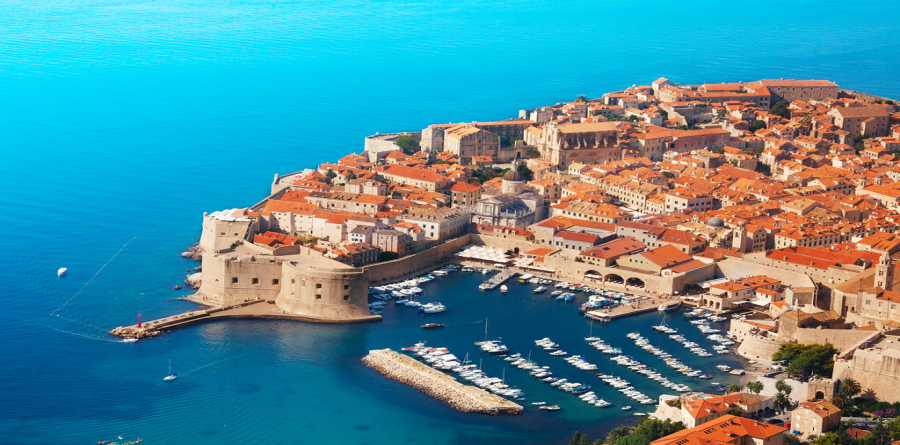
The old town of Dubrovnik

The walls, largely intact, present a bird’s eye view of the old town as well as some insight into the mind of the city fathers and their efforts to fortify the old town against invaders. Aided by cliffs rising from the Adriatic on the west and south of the Old Town, very thick walls on the landward side and a series of turrets and towers, the walls presented a formidable obstacle.

It’s about two kilometres around and the walk provides the opportunity to see some of the remaining unrepaired damage; the city was shelled for seven months in 1991 by Serbian and Montenegrin forces. Medieval fortifications are no barrier to modern artillery shelling a city from the heights above. The walk provides views of many of the features of this World Heritage site.

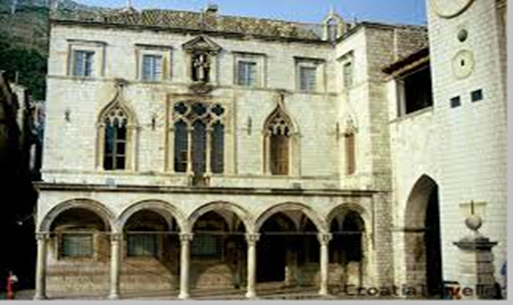
These features included (clockwise images): the old town port with its distinctive red-tiled roofs of buildings and apartments and the azure Adriatic Sea; the Venetian baroque style Church of St Blaise; the city’s main street, the pedestrianized Stradun; one of Europe’s oldest apothecary’s, founded in 1317, located in the Franciscan Monastery off the Stradun; Onofrio’s Fountain; and Sponza Palace.

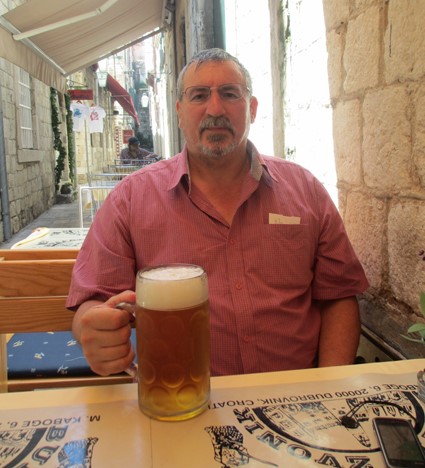
We realise we are hungry and find our way to a small restaurant in one of the lanes leading off the Stradun where we order beer, bread, cheese and sausage. The waiter tries to convince me that a large beer would be too large for me. I point out I am Australian.

Yes, a litre of beer is just right for lunch.  

Nell Holland: The Twin-Tube Tale

Their first washing machine, a Twin Tub Hoovermatic (TTH) bought in 1960, was invaluable when two babies arrived in two years. Then, in January 1965, Tom said they were going to exchange their Scottish existence for tropical heat. Molly had no idea where the Solomon Islands were but the thought of sunshine, rather than ice on the inside of windowpanes, convinced her. This was an excellent idea!

TTH was among the essential possessions packed up and taken but unfortunately, Malaita wasn’t ready for a TTH. The outpost Tom had been posted to only had an irregular diesel-generated power supply and TTH needed electricity. So, washing times had to be organised around times of available power.

To Molly’s chagrin, there was no hot water supply and no bath for the children, but Tom improvised. The washing tub had a heating element, and when filled with water it had a new function as a child’s bath. The girls loved their unique bathtub, and it gave great entertainment until they became too big to fit in. It was about then that Tom announced they were once again on the move. They were relocating to Fiji, where Molly was assured, they would find both hot and cold running water – and a bath.

‘TTH will have to come too.’ Molly declared, and as transportation of goods was part of the job’s perks, Tom was happy to pack up TTH and move to a home bigger and better than their Malaita house.

TTH still coped well with their washing, but its function as a bath was history – until Tom brought home a stray dog of indeterminate origins he called Bitz. Bitz was happy to remain dirty and matted forever but Molly insisted the smell needed eradicating! Little Bitz could be lifted into TTH’s tub and washed easily, and after an initial frenzied attempt to escape, he grew used to his regular spa. By the time Tom declared another relocation for his growing family, Bitz had moved to canine heaven, though looking cleaner on his last day than he had on his first.

TTH was now considered too old for another move, so Molly put a sign on the door.

FREE. Well-travelled, much loved washing machine. Condition as is.

It soon departed on the shoulders of an enormous, and incredibly pleased Fijian

‘Do you remember what you said when we bought it in Edinburgh?’ she asked.

Tom smiled. ‘I think it was something like – do you think it’s value for money?’ He laughed aloud. ‘Well, I think it might have been. Don’t you?’

Don Sinnott: Zooming the Branch Committee

The ‘old-timers’ had memories of smoke-filled rooms, with big-bellied men, shirts dishevelled and slackened ties askew, shouting over each other as they jabbed the air making their point. Clay had no experience of that era but, even in the more civil times in which he had joined the local branch committee, he’d known some rough meetings. They wore suits now and there was no smoking in the back room of the sitting member’s electoral office. But there was always profanity and shouting, threats to resign, personal innuendo… It was never a civil gathering.

Clay leaned back from the laptop screen showing the tiled faces of his fellow committee men. In these separated times they met by Zoom, so the laptop on his kitchen table connected him with this badly behaved shouting match. It was worse that a face to face meeting: they kept talking over each other, angry not only with each other but with the limitations of the technology. Clay was no Puritan and, when provoked, had as good a line of profanity as any of them. But somehow, he was profoundly uneasy with the language pouring from the tinny laptop speaker, invading his home. He was alone in the house, but he had sat at this table with Sally and the kids over breakfast, just an hour ago. In this place—his home—you didn’t speak and behave like that.

            He eased further from the screen. He was now out of the camera’s view and the sense of disengagement from the meeting came like a fresh breeze. A couple of the others had disappeared and reappeared during the meeting as from force of habit, they leaped to their feet to argue, then realised it was their midriff and not their face on-screen. But Clay felt like disappearing more permanently. If I shrink from this language and behaviour because it’s in my home, he mused, why is it OK elsewhere? Has the virus sensitised me to something?

Lawrie Stanford: It’s the Spoof!

To the Editor, Guns USA Magazine; 
from Chuck (‘Spoof’) Gunn-Smith Jnr

 I am a proud Amerigun,
 and carry firearms just for fun.
 To shoot them little critters 
 and keep them on the run.
  
 I wanna be like my ol’ Pa,
 so he’s proud of his first son.
 He’s a good up-standing man,
 a gun-totin’ son-of-a-gun.
  
 And my moral obligation,
 is to arm my own young son.
 So he will grow-up just like us,
 to take no crap from anyone.
  
 I swell-up with a father’s pride
 to see my boy with his six-shooter.
 There is nought you'll ever find,
 that you could say was any cuter.
  
 And I’m proud of US movies
 that celebrate our long tradition.
 Of autos, sex, crime and guns,
 we’re a society on a mission.
  
 Our mission is to secure
 our privileged way of life.
 And if we show any weakness,
 the vermin cause us strife.
  
 Jews and Blacks and Catholics,
 Commies, Unions, Homosexuals,
 Goons and Ayrabs, Islamists,
 and raving Left-wing Liberals.
  
 Terrorists and sympathisers,
 and The Feds, are all subversive. 
 They envy our sacred liberty
 and work in ways coercive.
  
 When they bully us good folk,
 our guns will stop them dead.
 It’s not true, that we won’t shoot, 
 as some commentator said.
   
 There’ll be no more atrocities
 like the twin-tower conflagration.
 With the death of goddam thousands 
 to our cries of indignation.
  
 While we shoot lots more of ourselves 
 than died in that horror flight—
 what the critics need to know is—
 it’s our constitutional right!  

David Hope: What is it About Deserts

The desert passes by the car window. 

People seem to think a desert is a sterile, barren place; an unending vista of not much, stretching to infinity.

Yet, what is passing by, is an everchanging scene.  

There is a straggle of undersized trees meandering across the land, marking a watercourse. Strangely, there is a sand dune a few metres high and on a sliver of the crest a grove of very green and tall trees; tall, that is, compared to the small trees along the bottom of the dune. How are those trees on the top of a dune so leafy and well-developed? Maybe a spring emerging there has helped their growth.

Against the horizon a noticeable leafy tree line clearly marks a major creek and a quick check of the map, shows the Warburton River flowing to Lake Eyre. Although, when it is crossed it is mainly dry.

There are a series of patches of gibber stones, interspersed with a variety of vegetation. Scrubby trees and at least four different bushes: the blue-green saltbush, a bright yellow-green; a lawn green and a dark green – I’ve no idea what they are, but it’s certainly variety. It’s not quite the green lushness of Ireland, either. In places it has obviously rained recently as there is a fair covering of grass.

The cerulean sky has a ruler-straight, pencil thin vertical crack in it. It’s a radio tower! And, getting closer, there are even thinner ruler straight lines angling off it; the guys to maintain it upright. It’s part of a network of radio towers across Australia that enable communication by pastoralists and travellers alike.

Don Sinnott: Walkers Follow Ridge

Today’s start point for our walk is near Woolshed Flat, a whistle stop on the Pichi Richi rail line, halfway along the pass between Quorn and Port Augusta. A road, now badged the southern section of the Flinders Ranges Way, shares the pass with the rail line and crosses it at several points. Whether you drive, or take the tourist train on its infrequent runs between Quorn and Port Augusta, it’s a picturesque trip between massive north-south rocky ridges of the South Flinders Ranges. But for us, neither road nor rail beckons: we park the car and it’s walking time. The route is not along the pass but up to the top of the western ridge before we head north towards Quorn.

What perverse folks the designers of the Heysen Trail have been. It seems that wherever the option of a gently undulating path appears, the trail markers point away to a challenging climb, because that’s the nature of bushwalking. It’s not the destination but the journey: the rugged climbs and descents, ankle-wrenching rock-hopping and prickly bushes—these mark our progress.

We clamber up the steep side of the ridge, trying to keep a trail marker in view and watching where our feet land. It’s a bit early in the season for snakes but we keep an eye out. The only significant wild-life we disturb on the steep section are ants, big and angry. An ill-advised rest stop by one of our companions on top of an unseen ants’ nest results in an anguished dance to shake them out of his pants. Too late—they’re at groin level! We leave him and his wife to strip off and deal with the biting insects.

We work our way further up towards the top of the ridge, marvelling at the view of the verdant pass that opens below us, the wattles and wild flowers just come into blossom and the grass trees with their seed shafts reaching for the sky. Then the way markers become less frequent—‘walkers follow ridge’ offers general guidance only and it’s up to you to make your own trail through the jumble of rocks and undergrowth. If you find yourself heading downhill, you’re off the ridge, so back up.

It’s a glorious spring day, big-sky country with scattered cloud; we exult in the freedom and the challenge of a world open only to walkers. Now the trail markers change to arrows, indicating it’s time to head down from this ridge. Be careful—long, wet grass conceals jagged rocks and abandoned lengths of fencing wire left by pioneering pastoralists who once tried to tame this land. The railway line appears and it’s time for lunch.

Then, a less pleasant walk along the line. Choose whether you want to match your stride to the sleeper spacing or keep to the rough ballast. The haul back to the outskirts of Quorn where we left the other car is less satisfying: ‘walkers follow ridge’ has marked the highlights of our day. Those supposedly perverse Heysen Trail designers knew their business.

Nell Holland: One Man and His Dog

It was the distant view that he liked. He could stand on this ridge and look over the tree canopy as far as Outer Harbour on a clear day. But not today. Today, the sun created stippled shadows, through trees flanking the path he’d just walked with the dog. The light occasionally blinded him, as branches moved in the breeze, but he gazed ahead, waiting for moments of clarity and respite from the glare. His wife was now permanently in the nursing home so there was no reason to hurry home. He no longer kept his life to any routine. When the day was fine, he walked, and let his thoughts wander. On top of this hill his problems seemed less important. Life found its own level.

He was alone here, apart from the dog sweeping enthusiastically with her nose, circling around him, enjoying the smells. He let her run, knowing he was always in her peripheral vision. He was never lonely with his dog, and this was one of many canine companions he’d had over fifty years. He thought about his dogs and counted them. Seven he’d had, and sometimes two at the same time. But this would be the last, and like a last child, she was indulged and well-loved. Her nights spent in a basket by his bed and his own days enjoyed in her company.

The light suddenly changed, blurring the green of the distant hills into the smoky blue-grey of the sky. There would be rain later, but right now, it was still dry, and the distant, leaden sky gave only a hinted threat.

He turned, whistled for the dog, and headed back. He’d done little that was productive, but he’d stood and thought about the past and the present; let his mind wander over problems and was returning home at peace. Like the skyline, the future was hazy. But life was still worthwhile

Edie Eicas: Temptation

I know I shouldn’t have, but it was too much temptation. Maybe it was boredom, or maybe it was my personality that looked for excitement and a laugh. I put the need for a laugh down to my parents known for telling jokes sourced from everyone who came into the shops.

My mother and father were multi-lingual, and their keen intelligence enjoyed the convolutions of humour embedded in the different languages. But, translated jokes into English sometimes don’t work – it’s a matter of the particular semiotics of each language: the play in sentence construction, puns, the contradictions within social structures and, the depth of cultural knowledge that sets the twist up for the explosion of understanding and laughter.

The joke teller, a parent, would laugh hysterically while I’d flounder not getting “it” and with the sensitivity of a petulant teenager taking everything personally, I would retreat with a huff, and a flick of my hair.

Of my parents, it was my mother who had wit, something I only appreciated as I got older. As long as her sarcasm and cutting observations weren’t targeting me, I was fine, and could enjoy her cruel side.

When I had my first child, an element in me took advantage of his innocence. I remember Andrew already walking, more like staggering around the house, and me, calling him. The hallway had a dogleg and excited at what I had planned, I hid in anticipation behind the wall. As Andrew toddled down the hall, I jumped out and screamed. He jumped and screamed in fright and turned to get away, running straight into the wall.

I couldn’t stop. I was hysterical with laughter at the unexpected reaction, while he was hysterical with fear. Oops.

Now he’s older, it’s about opportunity and redress. Now I’m the one who gets to jump at the unexpected as he screams and I scream in response.

Nell Holland: Double-Decker Day

The double decker buses of my childhood were the only mode of transport my family used on a regular basis as we didn’t own a car, and neither did anyone else I knew My favourite position on those red Midland buses, was upstairs, sitting right at the front where the wide windows gave an elevated view of the road ahead, and to each side..

From my seat I could watch men run for the bus as it left the bus-stop. While sprinting, they would hold out a hand for the steel pole in the middle of the doorway and nimbly jump onto the platform, thrilling me with what I considered to be Tarzan-like agility. Sliding casually onto a seat they remained alert, waiting for their destination. They’d then return to the platform, holding the pole and waiting for the bus to slow before stopping. Releasing the pole, they’d leap off while the vehicle was still moving, legs pedalling the air before feet hit the pavement at a reducing jog. It appeared a mark of manhood and I admired their agility each time it happened.

When I was ten years old, I once travelled on the bus with my grandmother to the nearest big town, about eight miles away.

Granny talked to me throughout the journey speaking English in the local Derbyshire dialect. Her speech was peppered heavily with words like, mardy, clarty, and jitty, and few passengers, unless they were from my hometown, would have understood much of what she said. I wasn’t encouraged to speak ‘local’ at home but could chat easily with Granny when we were together. However, when one of the men departing from the bus mistimed his exit leap, and made an undignified tumble, Granny exclaimed incredulously, ‘Na then! Is’t puddled? The nesh wazzerk’s clouts’ larruped’n mud’n rammel from’t causie. Ee bah gum, mi duck. He’ll be pigglin some scabs amorra  ̶  an scraitin! His tabs’l be burnin nah’s mucked up. Worra barmpot!’

{Look at that! Is he drunk? The silly man’s trousers are covered in mud and rubbish from the pavement. Well, he’ll be crying tomorrow, and his ears will be burning, knowing we’re talking about him making a mess of things. What an idiot!}

Everyone laughed at Granny’s explosion of home-grown vernacular – even those passengers with little idea of what she’d said!

Georgette Gerdes: Spectrum

 Why are you crying little girl?
 Lips buttoned, eyes red,
 snot dribbles,
 fingernails pick at scabbed bleeding scalp.
  
 What’s wrong sweetie?
  
 The void immense,
 a gulf
 abyss.
  
  
 The meltdown continues.
  
 Tears drizzle from bloodshot pools,
 pools hiding pain, in a room
 large and echoing, empty and cold.
  
 Meaning is unfathomable.
  
 The shudders and whimpers disengaged
 we’re in the dark,
 alone in that room
 no one understands
 none the wiser.
  
 Pleading for an answer, a signal, a message
 falls on deaf ears.
  
 Nothing forthcoming.
  
 only annoyance.
  
 Speech is dumb, impossible.
  
 My words ignite 
 howls, like gasoline on a bonfire
 limbs thrash, writhe, strike
 tension stretches through twitching fibres,
 incoherent cries and sobs persist.
  
 Please tell me darling, what’s wrong?
  
 The tiger speaks
 Don’t keep asking, leave me alone!
  
  
 Mother retreats, 
 leaves a blur of red agitation,
 cooks dinner empties dishwasher
 hours go by
  
 Over and over
 love unwanted,
 rejection anew;
 unredeemed.
  
 The aftermath
 grumpiness
  
 Reasons left unsaid.
  
 Time sprinkles healing 
  
 A furry canine head nestles in the tiger’s lap
 unspoken comfort
 when all else is:
  
 Disconnect 

Lawrie Stanford: Timeless Tales Retold in Verse – On the Farm

 Dad took us up to Angie’s farm
 to visit his older sister.
 He said we’d likely stay four weeks,
 it’d been a while and he missed her.
  
 We were greeted there with bad news,
 ‘Feathers’ the fowl had just expired.
 No more cluck-cluck or peck-peck’n,
 she was old and had grown so tired.
  
 But Angie wasn’t much bothered,
 it was just an every-day matter,
 she settled down to her work,
 that night was giblets in batter.
  
 Breakfast arrived the next morning,
 yielding chicken-liver paté.
 Served on toast, smeared with lard,
 made with chicken-fat I’d say.
  
 But lunch was much more wholesome,
 we were served up chicken wings,
 bulking-up the meagre portion,
 mashed entrails and other things.
  
 The next evening meal was special,
 drumsticks emerged at last,
 but shared among the many,
 it felt more like a fast.
  
 Then came the following morning,
 chicken again—we were aghast!
 Braised kidney, liver, spleen on plates—
 how long will this torture last?
  
 But Angie wasn’t much bothered,
 it was just an every-day matter,
 she settled down to her work,
 though we weren’t gettin’ any fatter.
  
 So lunch was bowl of chicken soup,
 head, feet what else—who knows?
 and as I looked more closely,
 there it was—the parson’s nose.
  
 That night there was a relative feast,
 it was a curried chicken-breast,
 but served with cloaca crackle,
 it proved to be quite a test.
  
 Together with heart and lungs,
 the third evening was chicken shank,
 thin legs, no bulk, were a problem
 and the smell was getting rank.
  
 Then chicken haggis in the morning,
 surely, the last chicken course?
 with a cheeky brown over-pouring
 of a blended ovarian sauce.
  
 But enter, divine salvation,
 well actually, more bad news,
 the pet lamb died of constipation,
 he hadn’t been doing his poos.
  
 Goodness me! I thought in wonder,
 about the death ‘round here of late,
 perhaps all the stock on this farm 
 had reached their use-by date?
  
 But Angie wasn’t much bothered,
 it was just an every-day matter,
 she settled down to her work,
 and prepared a cold-mutton platter.
  
 It was a sort-of relief that followed,
 to have confirmed, the change in the fare,
 lamb chops were served at breakfast,
 with a glaze, done medium-rare.  
  
 I swallowed the lamb-brains lunch,
 though a bit of a waste I fear,
 when I had to leave the table,
 with violent diarrhoea.
  
 But shank served up in the evening
 (despite my stomach’s contortions)
 as well as lamb’s-blood haggis,
 was at least, in decent proportions.
  
 The most horrible thing then happened,
 Uncle Don passed away overnight,
 while unknown exactly what killed him,
 his tummy seemed rather tight.
  
 But Angie wasn’t much bothered,
 though the matter she said was so-so,
 but Dad announced very quickly,
 there’s a problem at home
                        —we gotta go! 

Edie Eicas: Free Range

Free range kids not tethered by the fear of a parent explored the back blocks. School holidays found the group of seven to ten year old boys roving the hills of Glen Osmond. In a pack, it was safety in numbers. Anyone who thought they could abduct one of them was dreaming. They were loud and comfortable in their neighbourhood and with their bikes, able to ride further than they dared when on their own.

The hills of Glen Osmond, on the edge of the bush, held lots of adventures. Scouting for old silver mines, spotting sleeping koalas high in the eucalypts and finding sleepy lizards sunbaking on the road, meant stopping and huddling to discuss the ecology of their area. Recounting what they’d seen, all wanted to add something to the story. But as they described the spiders and snakes, it was their paroxysms of hysterical high-pitched laughter that revealed their new found courage was slightly fragile.

Before the mobile phone, their rule was to be back for lunch and later to return before parents arrived to shepherd them home. A stay at home mum, I was often left babysitting the boys my sons would bring home from school. While some stayed as friends or were there just because they were neighbours, others came and went instantly.

I remember walking outside to check on the boys only to find that Daniel had found the aluminium poles from the tent and, climbing onto the brick back fence, stuck the poles down his shorts and was about to jump. My heart beating madly, I demanded he take the poles out of his pants and give them back. Walking away, I felt faint with the thought that had he jumped, he could have speared himself and done a great deal of damage. When the nightmare returned, all I could see was a child dead on the back lawn. Needless to say he was not welcomed back.

Nell Holland: Dee Time

She wasn’t the best nurse in our student year, but she was the one we all wanted to copy for style. Dee would have been more at home on Carnaby Street than the world of a hospital training school. It was 1962 and with her geometric hairstyle fitting under her nurse’s cap like a polished helmet, she could have been the cover girl for ‘Seventeen’, the magazine that often had Twiggy on the front.

She was fashionably slim, moving through the hospital looking vaguely disdainful and the few patients who dared to ask Dee for anything as basic as a bedpan, were usually disappointed. That was left for the rest of us who were in perpetual motion, ever leaning forward in the vain hope we could arrive at the next job quicker. Dee glided. After being lectured by Sister Tutor that nurses never ran, we moved as speedily as we dared. Seeing a nurse running could create in patients the kind of panic we all experienced daily. No emotion could show that might disconcert others.

Worried? Smile. Tired? Smile. Our trained reaction to everything was a useful tool that helped through many scenarios. It was an implement Dee never utilised. Her face spoke silent volumes.

She only went out with wealthy males with cars. We were eighteen and the rest of us were simply happy to have someone to call a boyfriend. They were usually students as poor as we were who used buses and shared our fish and chips. Dee ate in restaurants.

Dee discarded. many suitors, but when she told us she was no longer with Tim we were stunned. MG-B Tim had looked and sounded perfect, but she’d discovered a flaw. On their last date he’d spent ages trying to kill a spider he’d found in his car, and she’d later discovered it was one of her false eyelashes. It must have fallen off in a moment of passion, before being battered with his shoe. Those eyelashes had cost her money.

Dee’s nonchalance was lost that night, but by morning, it had returned, and she was once again sublimely impervious to bedpan requests!

David Hope: Clichés

We are counselled to avoid the use of clichés in our writing, mainly because clichés are overused pieces of language that have lost any freshness of meaning, sometimes to the point of futility; they detract rather than add to the written word.

That injunction led me to muse on why we use clichés in our speech.  And the musing led me to several potential reasons for their use. In no particular order (is that a cliché?), here are the musings:

We imitate an old or a new phrase we have heard someone say where we believe the speaker is worth imitating. As they say – imitation is the sincerest form of flattery. (Oh no, another cliché.)

We become lazy in our speech and instead of thinking about making a meaningful contribution to the conversation or discussion, because sometimes it’s a tough row to hoe, we don’t make the effort. (Yes, another one – but it could be two.)

We think the phrase is appropriate and everyone will understand what is meant, because they have heard it a hundred times before. (Wait, there’s more.)

We hear them often and convince ourselves they are popular, and we should use them – because we want to play on the even playing field. (They are endless, are they not?)

Enough of this musing, though I am sure we can all come up with many more reasons for using clichés. And to be fair, there are times when a cliché is apt.

A more important musing intrudes. We have read (and maybe, heard) the famous speeches, marvelled at the poetic word, been transported by the language that builds a magnificent picture in our mind of beauty or sheer terror.

Let us aspire to that ideal and shun the cliché.

Don Sinnott: House Hunting

They were rosellas. No doubt about it—dead ringers of those on the sauce bottle. The brilliant birds appeared in our yard a few weeks ago, paired off for the breeding season. But surely it’s still winter, the sap has yet to rise, avian ardour must lie dormant. Yet there they were, a devoted couple, clearly house-hunting for a nesting place where, in due season, they would produce and hatch their eggs.

            We had a gap in the fascia of the house, rotted timber removed in anticipation of having a tradie make repairs. It was not really a rosella-sized gap, but with a bit of steady beak-work it could be made so. And it was. The birds took to their work over a period of days, littering the deck with woodchips until the hole was large enough for entry. Voilà, a home!

            Not so fast, you feathered squatters! We’d love to have the beautiful birds nest in our yard, but on our terms, so I covered the hole and set about making a bird box to be installed on a tree. This proved a monumental failure—I must have misread dimensions suggested online as it appeared to be a standing-room only habitation. My granddaughter wrinkled her nose and declared it ‘far too small, grandpa.’ But I was saved: a bird-loving friend, hearing of my failed project, donated a surplus bird box of adequate dimensions and it was duly installed on the tree.

            The final chapter saw our rosellas being coaxed to turn their attention to this purpose-designed accommodation. It took some doing; they remained preoccupied with attempting to regain entry to the hole in the fascia. Finally, an apple placed near the entrance of the newly installed bird box opened their eyes to this desirable real estate. So now they are in residence. And we await what Spring will bring.  

Postscript: Spring has sprung and a listening ear near the bird box reveals that our residents now have a twittering family. We’ve been told that the family will simply vacate the box, no farewells or thank-yous, when the hatchlings can fly.

Maybe the parents will return next year and raise another family.

Nell Holland: Calladine

The Calladine brothers volunteered to fight in World War 2. Albert and Sid were killed, and George returned without legs. Tommy was ‘lucky’ with no obvious wounds, though his mind was gnawed with distress; folk called it shell shock.

In 1940 Tommy had been a self-assured eighteen-year-old, charming old ladies attracting girls and breaking hearts. Eight years later, he was unkempt, wandering unceasingly, giving children nightmares. He walked fields with the wind at his back, grey-streaked hair blowing in a tangle, mouth muttering words lost to the air that his restless arms parted before him  Shabby boots were tied with string that dragged on the earth, and the ‘demob’ overcoat flapped as he walked, like the useless, fluttering hands of a drowning man. In the barbershop men requested a ‘short back and sides’, so Tommy’s long hair and beard were shocking to children warned to, ‘keep away from Calladine’. No longer Tommy, he was just called by his surname. Occasionally he’d scoop brook water and drink thirstily. There were minnows and ‘things’ in the water, but he was oblivious.

They’d become a gang because they lived on the same street of council houses, Manor Road. Children were everywhere in those years and ran unfettered, not questioning life or each other. No-one asked why Rita had so many uncles, why Marjorie’s dad was always angry, or why Richard didn’t have a dad. It wasn’t their business. Their business was running, climbing, or making holly bush dens to play in. There they drank bottles of tap water, ate jam sandwiches and planned adventures to fill the day. They wished for nothing more, without thought of the future. Together, they felt secure. They were ‘the Manor’ kids’.

But then they found Calladine lying on his back in their den, silent and still. Was he dead?

Nell Holland: Best of Times

The baby-breath touch of the zephyr lifted her hair, whispering softly over her cheek. She felt in harmony with this land, but she’d forgotten this summit was so popular. People had gathered to enjoy the view at this time of the full moon. and most were couples, just as she and Gavin had once been.

The journey by taxi up Kloof Nek Road had been slow and now she was here, her mood was reflective. She smiled, blissfully unaware of her surroundings, until someone turned on a small radio. The music was soft, and no-one minded the extra touch of romance on such a balmy night. She closed her eyes remembering when she was twenty and first heard that music.

She’d been newly married, and in the country less than a month. Gavin had started working in a town situated on the edge of the Transkei just after their wedding. Their relationship had caused much comment from her friends who were shocked at the rapid escalation of romance into marriage. ‘Too good looking– too good to be true’, were just some of the remarks. But she hadn’t listened. Gavin was 6 years older and so certain about what he wanted, so when he said they’d begin married life with five years in South Africa, she didn’t hesitate. She was in love.

The weather had been mild on that long-ago Christmas Eve when they’d strolled through crowds in the town’s main square. Everyone was in a festive mood, the streets festooned with greenery, bright ribbons, and Christmas decorations. At the head of the square was a cathedral with a belltower. From there, a loudspeaker was broadcasting Christmas Carols which drifted over the rooftops, adding happiness to a lovely day. Suddenly, there was a pause followed by a recording of Beniamino Gigli singing ‘Panis Angelicus’. His voice soared on high filling her with indescribable joy and slowing the bustling crowd. When the music stopped, it appeared the world held its breath for a long moment before everyone began once more to move, laugh, and speak. Gavin had kissed her as they stood in the square and promised he’d love her forever. She’d believed him.

Their first good years, and the family they’d made together, had been a comfort through many hard times. Life hadn’t always been perfect, but those early memories had been her own ‘Panis Angelicus’.

Her face still held a wistful smile when she felt a hand on her shoulder and turned to see Gavin. ‘I’m sorry I’m late but the conference has ended, so we ‘empty nesters’ have the week to ourselves. We can enjoy being back here before we return to London.’

She touched his lips with her fingers, ‘Listen’.

As the last notes faded, he kissed her gently, ‘Remember me doing this a long time ago? I promised to love you forever. Now it’s just the two of us again, and you’re still my only love. Do you remember…?’

But she kissed him back. The question was forgotten. And the moment added to her memory store of the best of times.

Lawrie Stanford: I’m a Corona-Conspiracy Theorist

Sitting at my desk this afternoon it became clear where the coronavirus came from.

As my vacant gaze drifted across the desk, the design on a box of tissues forced itself into my consciousness. The origin of the coronavirus was revealed! It was in fact trumpeted by the perpetrators—Kimberly Clark the producers of Kleenex tissues! 

It’s a conspiracy

Kimberly Clark had revealed their involvement through the design illustrating the containment curves for the spread of the coronavirus.  Not just the first phase, with its rise and fall, but also the emergence of the second phase.

The evidence on the tissue box was compelling. After all, I bought the tissues well before the coronavirus struck. So, Kimberley Clark had pre-announced the roll-out plan for the coronavirus. THAT was the role of the tissues box design. The arrogance of it! And, they put their name to this insidious plan!

Mr Trump, that fake-news conspiracy theorist, tried to put us off the scent with his own conspiracy theory—that the coronavirus was produced in a Chinese laboratory. And what now? Will the American President declare war on China? I don’t think so. His sole ploy is to deflect attention from the real perpetrator—an American company. 

Sure, you can say it wasn’t too bright for a tissue-producer to create a virus that results in a dry cough but how else do you explain the irrational disappearance from supermarket shelves of two other Kimberly Clark products—rolls of toilet paper and paper towels? I’ll bet Kimberly Clark secretly printed braille messages on each leaf of their toilet and hand towel rolls, so users had the idea imprinted on them that they just had to buy more of the stuff! 

Deflecting attention from the US perpetrators of the coronavirus pandemic goes beyond just blaming the Chinese. The US has one of the highest mortality rates in the world—so who in their right mind could accuse the Americans of perpetrating the coronavirus? The high US infection and mortality rates have been brought about by a lack of Presidential leadership. Contrary to containing the pandemic, Trump has made ludicrous forecasts, sacked the truth-tellers and encouraged the militants who have agitated against controls. 

The staggering mortality rate reflects the ‘Dark State’ within the land of the free. 

What the Dark State has preserved, is the freedom of US citizens to act in self-interest. Freedom to exercise brutish power over their fellow citizens. Freedom to carry weapons to enforce their own free will. Freedom to impose US values on the world. Comfort in privilege, insensitivity to the underprivileged and hence, a failed state in respect to social welfare. Rather, it uses the magic of marketing to ensure that illusions trump reality. But it DOES NOT mean freedom from the devastating impact of a viral pandemic. No! It’s actually a US multi-national, profit-maximising, pharmaceutical, aided and abetted by a self-serving leader, that has created the pandemic! 

So where in the hell is James Bond when you need him? Eon Films deferred the April release of the latest film until April next year. Oh-no! Eon is a US company. Deferral was to prevent that pesky Brit, Bond, from destroying the US pharmaceutical plant where the coronavirus was created!

Don Sinnott: COVID Daze

Dan wasn’t a party a party animal. Never an expert in small talk, at social gatherings he either kept to himself or found a soulmate for a one-on-one chat. At work he was more attuned to planning business strategies in his own headspace than to the interactive ‘brain-storming’ sessions his management periodically called. His firm had once run psychological tests on its senior managers and when his results came back as ‘strong preference toward introversion rather than extroversion’ he agreed: the test had nailed it. He enjoyed his own company, and at week’s end, preferred to skip the firm’s TGIF drinks session and head off for a quiet restaurant dinner with Sally, on a baby-sitter-provided leave-pass.  

But this COVID experience had cast a cold shadow. Working from home, he had become edgy, easily provoked to anger, negative. It came to him slowly that, introvert he may be, he was missing human contact with work colleagues. Terribly. The Zoom sessions, the new world of solitary work-from-home that was touted as liberating and flexible, were no substitute for the busy office environment that had been his grounding until just a few months ago. He now realised how important his chatty twice-daily walks around the open-space office had been. He followed this self-imposed discipline as a recommended ‘management by walking around’ strategy but now he saw how critically important it had been for his own wellbeing. Surprising as it was to him, he had to concede he needed work colleagues around him; he could not thrive in isolation and his productivity had hit rock bottom.

But what options did he have? He was aware he was getting on Sally’s nerves. It was draining plying a surly husband working behind the study’s closed door with periodic coffees while she continued to cope with the kids. And when he emerged after a day’s solitary work, they found little to talk about: no point asking, ‘How was your day?’  

Sharon Apold: She Left Alone

My Grandmother looked at me. Her eyes shone in her pale face, searching for the comfort of recognition. I know she saw the silhouetted figure and heard the voice of a woman holding her hand. My hand. I could tell I was still familiar to her, but somehow difficult for her to trust between the wakeful dreams and emerging fears of her passage into death. 

Coaxed into relaxation, enough for her eyes to close a moment, only to re-open, flutter and realise again that death had not yet come. 

Minutes passed; hours went by. For her a hundred years had disappeared leaving her alone on the shore; waiting for the tide to take her tired body. To allow her soul to leave. To find her husband, her baby son, her young daughter, sisters, brothers. Her friends.

She said that God, to whom she had prayed for a century, had forgotten to call her. Or perhaps an unforgiven sin would draw her to hell. She floated. Here on earth, between dimensions.

I left as evening approached. My aunt and uncle were on their way.

Alone, tears wet my face. Childhood memories brought warmth and comfort. The wish that my mother was still alive resurfaced.  The pain of her absence was freshened.

Between our shift change, my grandmother left us. 

She left alone.

“As for me, I am already being poured out as a libation, and the time of my departure has come. I have fought the good fight. I have finished the race. I have kept the faith.” The Holy Bible: 2 Timothy Ch 4, verses 6 & 7

Edie Eicas: Gardening Tales – Part 5

I have a philosophy when it comes to trees and global warming. My position is that if you drive a car, you plant trees to offset your carbon miles. As a result, I proselytize; annoying a number of people but feel I have a responsibility, no matter what.

My friends will tell you I’m tangential; not able to follow a straight line or stay on point. I can be all over the place. That also comes with trawling the internet; I tend to get lost, follow links and then have no idea how I got there. Needless to say, somewhere somehow, I found a statement that said, “You need to plant 11 trees if you drive a car.” To that end, I’ve planted as many trees as I can, wherever I’m living at the time.

While in Queensland looking after my parents, I fell in love with the different varieties of frangipani I could see in people’s gardens. Triggered by memories of my mother’s huge frangipani with cream flowers that had perfumed the summer air of her kitchen garden in Rose Park, I was on a mission. In Queensland, what was on offer in terms of colour was extensive, and I was fascinated. I made a decision. While with my parents, I would plant additions to their garden.

I’m a propagator. Meaning I take cuttings and cultivate. My kids would say I nick, but I’ll always defend myself against that implication. I never take the lot; I only take pieces from the bottom of plants or branches that don’t disturb the symmetry of the plant.

While Alida, an old friend from Adelaide, and I were driving up Tamborine Mountain I spied a huge frangipani dropping apricot flowers over the verge and I was overtaken with desire. ‘Stop, stop,’ I yelled. Caught by my demand she did and to her shock, I jumped out of the car and ran back to the tree. I looked for the best branch to snap without destroying the structure, and then raced back to the car with my spoils.

Alida is my born-again friend who, at that time, was just finding her way into a different Christianity and was somewhat unprepared and horrified as I stuffed the oversized branch, leaking sap, into her car.

Getting back into the passenger seat, I yelled, ‘Go, go,’ and in shock, she planted her foot. My innocent getaway driver.

Where Alida was concerned, it was not one of my finest moments and all she kept saying was, “But I’m a Christian. I can’t believe I helped you.” Guilt was our companion that day and all she could do was ruminate over her assistance in a crime. Unable to reconcile her actions, she delivered a tri-colour frangipani to me in the hope I would stop my “propagating”. She missed the point. I was on a mission and hadn’t quite planted the 11 trees.

The last frangipani I found was one with pure white flowers. I planted it after my stepfather’s death and to record the developing dementia of my mother. In many Asian cultures, white is associated with death and, to the Vietnamese, the flowers become the ghosts of loved ones.

The tree left growing in the garden spoke of my feelings of loss.

David Hope: The Reader

 The reader imagining they have been
 Transported away to places unseen
 Experiencing things dirty and clean 
 Stuck in the mud with the African Queen
 Scoured from the sands by a wind so keen
 Washed by waters some clear, some saline.
  
 Mixed feelings of fear, feelings of joy
 The freezing cold of an Arctic convoy,
 Trembling at the villain’s devilish ploy,
 Moved by the love of a girl, a boy,
 The larrikin spirit of the tomboy, 
 Sentiment invoked by Leo Tolstoy. 
 
 Fiction, biography, history, truth
 Grist to the mill of the reader, forsooth. 

Nell Holland: A Great Party

Too many friends had died. She needed cheering up, so Tony proposed a party.  But the day arrived, and Ann still felt miserable.  Preparations completed, she took ten minutes to try to find some serenity.  Her eyes closed, and slowly she relaxed.

It seemed seconds later when guitar music opened her eyes.  Howard and Rick were at the far end of the room, playing guitars and singing ‘Satisfaction’, accompanied by David when he wasn’t drinking from a beer tankard! This wasn’t how she’d planned the evening to begin but the room was already full of people and noise. Barbara was there with Roy.  His arm was around her shoulders, and they were laughing at something with Monica and Sue.  The last time they’d all been together Monica and Sue had been competing for the same man. Thank heavens he won’t be here tonight, she thought. 

John, Barry, and Kevin were talking to Doug, as far from the music as they could get.  Her cousins made a striking group with red-haired Doug the most handsome. But as always, John’s brooding presence was attracting all the female attention.  He gazed lazily around but when he caught Ann’s eye, he raised his hand and gave a wide smile.

Familiar laughter identified Victor and Lois guiding Sheila and Vivienne to where Andrew was pouring drinks. The two younger women seemed intimidated by everyone’s easy familiarity, but the Victor/Lois combo was putting them at ease. And Andrew, she knew, would say something funny to make them feel included.  Ann knew she should be the one chatting and mingling with her guests, but she felt detached and tranquil. She was happy being an onlooker.

A Scottish voice, that Ann recognised as Jean’s, was complaining about the music, saying it would be better if they could have an eightsome reel rather than this ‘noise’. Mike and Roy moved to her side and handed her a glass of whisky. As she sipped, Mike gave her a placating hug and Roy said that later they’d roll away the carpets and Jean could organise everyone to dance ‘Marie’s Wedding’.  But in the meantime, perhaps this good malt would placate her? As always, charm, humour and Glenmorangie won her round.

The guitar music finished, and another voice called, ‘Clear a space!’ The sound of Elvis’s ‘Don’t be Cruel’ filled the air and Harry and Annette jived with the ease of practiced years.  Their dancing created a circle of people clapping to the beat and watching with delight.

The doorbell rang loudly, startling Ann. She twisted her head to see Tony greeting guests, then quickly turned back to the silent room which had just been filled with music and laughter. As she looked, people evaporated like smoke. Only Rick stayed a heartbeat longer to say, ‘You told me it was au revoir and not goodbye.  And you were right, Ann.’

As everyone disappeared, she heard their fading voices calling in unison, ‘Have a great party! We’re still all here. Love you!’

Don Sinnott: Dirac’s Lecture

Lectures—I’ve had a few. I recall some as soporific, mechanically delivered verbal sludge. Others had me hanging on every word from a skilled communicator. Yet one lecture I recall most vividly, although delivered in a droning style, had me on the edge of my seat.

A group of theoretical physicists emerged in the early decades of the twentieth century, upending the settled world of classical physics. It included Einstein, Plank, Heisenberg, Schrodinger, Bohr… so many European names; and one notable British physicist, Paul Dirac. The legacy of this group is modern relativistic quantum physics, which underpins all of our modern electronics, including the astounding computing power of the smart phones we carry with us.

My sole personal encounter with one of this group, god-like figures to physics students of my generation, was at a lecture by Paul Dirac, 1933 Nobel Laureate and one-time occupant of Isaac Newton’s chair at Cambridge. In 1975 I was at a radio science conference at the University of New South Wales when news burst that Dirac was visiting the university and was about to give a public lecture. A group of us immediately abandoned the conference and headed for the advertised venue. It was well we rushed to get a seat: the tiered theatre soon filled far beyond its capacity of 400 or so, eager students sitting on every available step and a disappointed throng at the door turned away.

On cue, an apparently old and stooped man, shabby jacket over his jumper and a scarf wrapped around his neck in the British style, was ushered onto the platform of the theatre. He began to speak, quietly, almost diffidently, wandering the platform with eyes down and with little apparent awareness of his audience. We strained to hear, transfixed not by his delivery but by his presence. He spoke of debates with ‘Albert’ and the robustness of exchanges with other peers of that golden era of science, always using the first names of those giants of physics whose surnames litter the textbooks.

‘The field was so open in those days that even second-rate physicists could produce first-rate science,’ he noted in self-deprecation. ‘Today the field is so developed that first-rate physicists struggle to produce second-rate science.’

He would turn to the blackboard from time to time to outline a mathematical proof, his voice lost as he addressed the board. And then, abruptly, the lecture finished. He ceased his wanderings and stood impatiently as the local professor of physics gave an effusively tedious vote of thanks. Ignoring the ensuing enthusiastic applause, Dirac repositioned his scarf, shed mid-lecture in deference to the over-heated theatre, and headed for the door.

By any measure, the presentation style was abysmal. Yet what a memory the lecture leaves. The medium was most definitely not the message.

Dirac’s memorial slate in Westminster Abbey

Postscript. Dirac, who was 73 when he visited Australia but appeared to me much older, died in 1984. In 1995 a memorial stone in his honour, showing his crowning achievement, the equation describing the inner workings of the electron, was laid in Westminster Abbey, where it touches the gravestone of Isaac Newton.

And a provocation for BWG poets: Dirac, the ultimate nerd, once said ‘The aim of science is to make difficult things understandable in a simpler way; the aim of poetry is to state simple things in an incomprehensible way. The two are incompatible.’

Sharon Apold: I Am Awake

Night…
we meet again
and again
and again.

In spite of my objection,
for hours we will joust.

Sleep, the elusive.

I will grasp my pillow, 
wring that comfort dry.

Night…
you will shine your moon.
I will toss,
turn, 
defy your silent gloom.

Awake…
In that awful hour.

The one of deathly quiet
when sleep should rest the mind, 
and dreams 
invade the place of reason.

I am awake.

Night…
I am your antagonist
I can’t comply,
no sleep
how hard I try.

Fingers grasp me
bring horrors
evil and dark, but I escape.

I am awake.

Edie Eicas: Gardening Tales – Parts 3 and 4

Murder

Another year and I still hadn’t learnt about scraps composting through the garden. The pumpkin seeds had generated again, and another group of vines spread through the front. At first it was water conservation and I ignored them but, with finding the first Butternut, a new plan emerged. I began watering in earnest. The vines in gratitude spread and began taking over. Now I was a detective searching for flowers. The routine known, no more scraps in the garden, everything into the compost bin.

With each female flower found, the search for a male, and the greedy program begun again: IVF. The morning ritual: coffee and an obsessive search meant the counting of my babies. Five formed balls of green Jap and two ballooning Butternut. But wait. What! Teeth marks. Tiny scrapings of baby skin. Ah no, they were not going to get my prize.

I have a glory vine over the northern side of my veranda to shade the house in summer and I’ve trained the vine to reach from one side to the other. While celebrating my birthday and standing under the veranda with a group of friends, I was distracted by a rat running across. Shock and shame left me speechless, but preoccupied, I instantly forgot what I’d seen.

The Coronavirus hit. It was self-isolation and I was back in the garden attending to autumn’s need and so found more evidence of crime. With the last experience of rats I’d showered my garage and shed with Ratsak, and so was not overly worried, until a friend rang from London complaining about her garden.

Mayfair was shutting down shops and restaurants. The call to stay home and be safe meant no food in bins or rubbish lying around. With demolition of nearby buildings disturbing nests, a migration of rats into her property was wreaking havoc. Across the street from me the Cohen’s were also demolishing, and the northern side of Burnside Village had disappeared. Life had changed. Ah, now I understood. I’d set the poison but I hadn’t recognised the potential invasion from across the street. I needed to protect my garden and to be proactive as I too was facing a growing menace. This was war.

Mitre 10, rat-trap and Ratsak, Coles and cheap peanut butter, I had a plan. Balling a pellet of Ratsak into the peanut butter I carefully set the trap placing it near the growing Butternut, and waited. Next morning: pjs, dressing gown, rubber boots and curiosity, I was in the garden early. The peanut butter was gone but the trap not sprung. Oh well, whatever took the bait would not be coming back, I hoped.

Looking through the garden another pumpkin had been gnawed, small incisions in the skin. Now on the lookout, I surveyed the garden. The tops of the snow peas were eaten, luscious new pumpkin leaves were bitten through. Something was eating the tops and new growth. Now guilt began to take over. Perhaps it wasn’t rats but ring tail possums. Out on the street I’d find them dead, zapped by the electricity wires and one day, I found one drowned lying motionless in my pond, having fallen off the water tank.

Was it rats or possums? Hmm, I needed a better plan. More peanut butter and Ratsak in poisonous balls strategically placed around the garden in hard to access places. I hoped their position was only available to an animal capable of squeezing through small spaces. I wanted to eliminate the rat problem not the possums.

More and more peanut butter disappeared. Now I was concerned. I shouldn’t have looked up Google and possums. They like peanut butter as well. Oh no–more guilt to add to my Jewish–Catholic conditioning. Now I needed a different way to protect the pumpkins. God, I hoped I hadn’t decimated the possum population. And please God, whatever that noise was in the roof, please don’t make it a dying animal.

Climate Change

Change came quickly. The cold blew in and frost killed my pumpkin vines; they burnt and disintegrated.

My neighbours, newly arrived, put their house on the market and disappeared. Not before they had wreaked havoc over their property. Most of the trees protecting the house and garden from the traffic noise, pollution and heat of Portrush Road were cut down.

They spoke little English, and I was unable to fathom why the destruction. They had filled in the swimming pool as it appeared a leak had left them with little option, but the garden?

The peach tree that offered juicy orbs: gone, the persimmon with its beautiful orange fruit in autumn on a tree denuded of leaves: gone, the feijoa that dropped its fruit over the fence collected for the sweet sour taste: gone; the hatchet job nearly complete on what was a beautiful garden cared for by its previous owners. Only the grape vine and avocado tree left intact.

What remains is a block open to the western sun with no summer shade, no perfume from the native daphne, no place for birds and no harvest for bees. Trees that took years to grow cut down. I’m left to speculate about the reason for such a tragedy. Did they hate the work of raking leaves, pruning and gathering fruit? Or did they want the block to look larger so the new buyer could speculate over future development and a bigger profit?

Now Burnside Village, across the street, stands as a glaring advertisement to Capitalism as it spills its lights into the night, and semi-trailers and B-doubles roar through the neighbourhood. With no protective filter of leaves, the denuded garden has opened the street to light and sound and we’ve lost the privacy of the cul-de-sac.

I guess I’ll just have to plant trees on the verge.

Lawrie Stanford: Stranger Danger

The officer was polite but firm while her male companion had a look that was more firm than polite.  The female officer was the first to speak.  ‘Sir, you’ve heard of stranger-danger, haven’t you?’

Earlier, I arrived home late from work, a little before 7pm.  As I walked through the front door, I could hear the kids upstairs watching TV.  I walked pass them into the kitchen where Mary was preparing the evening meal and said, ‘Good evening dear! What time did you get home—you seem to be running late?’

‘Yeah well, there was a special meeting called after school. I had to attend as a Team Leader.’

‘Oh?’ I replied.

‘Annnnd,’ she continued, ‘I had to pick the kids up from Michael and Robyn’s.’

‘Why?  That’s way over in Fisher and the kids know the drill about getting home and doing their homework.’

‘Well you need to know that the kids were accosted tonight after school’.

‘Whaaa …’ was all I could raise.

‘They told me, or at least they told Robyn, that they were at home when a raving, half-naked, homeless lunatic, carrying an axe, knocked on the front door and tried to kill them!’

‘Go on,’ I said.

‘They said he garbled like a monster but thought he may have asked them if their father was home. They figured he wanted to know if they were by themselves.’ 

‘OK,’ I said, ‘I think I understand what happened here…’

‘Well you can explain it to the kids because they didn’t understand it at all. Melissa slammed the door in his face, ran screaming down the passage, grabbed Tim and the two of them bolted out the back door, down the side driveway, past this maniac, and onto the front road!’

‘So, they were OK!  I….’

‘You bastard!  Didn’t you hear me, someone tried to kill the kids with an axe!’

‘No, no, no—you didn’t hear me out. The other day, I noticed a tree lopper over the road at the Robinson’s. He was thinning out that old redgum of theirs. He was halfway up the tree and it wasn’t easy to talk to him—not just because he was up the tree but also because he spoke with an Eastern European accent. But, I managed to ask him if he would give me a quote to thin our trees. He said he would drop over in the next few days to talk to me about it. So you see—he wasn’t raving or demonic, he just spoke with a thick accent; he wasn’t a homeless lunatic, just unshaven; and he wasn’t a murderer, he was just carrying a tool of his trade. I presume he wasn’t wearing a shirt because he wasn’t wearing one the other day.’

Only partly satisfied, Mary said, ‘So you’re saying this was a misunderstanding, but I can tell you, it wasn’t just the kids’ misunderstanding—the whole bloody neighbourhood didn’t understand. Robyn didn’t understand, she rang the cops. They were greatly concerned in their misunderstanding and rang me. And, I didn’t understand, and got dragged out of a meeting—which didn’t understand why I ran out whimpering! So, there’s just a few who didn’t understand!’

‘Oh gawd,’ I murmured.

‘But don’t you worry your little head about it buddy. When I finally got home with the kids, and convinced them it was safe to come inside, Mrs Robinson came over greatly concerned, to ask if the kids were OK. She said her tree-lopper told her he’d knocked on our door to ask if you were there. The next thing he knew, two kids were screaming down the driveway, onto the road and had jumped onto a passing tractor coming down the street from the bushland at the end. After listening to a hysterical explanation from the kids and lots of furtive glancing at the poor tree-lopper stranded on our porch, the tractor driver took the kids to Michael and Robyn’s. So, you can add three more people to the list of people who didn’t understand!’

‘And,’ she continued, ‘I’ve spent all my time until now, explaining to everyone—who didn’t understand—exactly what had happened.’

‘Ah well, all’s well that ends well,’ I said as the front doorbell rang. ‘Don’t worry darling,’ I added, ‘I’ll get the door.’

Leaving a steely stare burning into the back of my head, I opened the door to find a cop and a community welfare officer standing there.

Georgette Gerdes: Plumbers’ Dream

The effluent was overflowing. Black sludge in the basin of the outside tap. Congealed, gritty and pungent. The plumbers’ dream. Rivers of black trickled from outlets. Sinks bubbled. Water pooled and slowly drained from showers and poos came back up decrepit toilet pans.

I need new pipes!

He comes six monthly to unblock. Heavy metal coils and noisy machines in tow. Just a cup of tea and the hefty fee in return for back-breaking work. Man versus bottlebrush tree roots.

We’ve got to know various plumbers over the years – the skinny scolding one, full of disaster scenarios-grumpy. The young, keen ripper offerer, wanting good internet reviews and now Chris, near retirement, who is just nice and likes my dog. You can judge a lot about someone’s character by the way they treat your dog. Dog people are good natured!

The show starts. Vibrating metal snakes are propelled down pipes. Thrust, shove, plunge, bulldozing their way through dark, icky tunnels, mashing nature’s revenge for urban living. Over and over. It’s touch and go. Like a grimy cardiologist, he delivers. The clot is unclogged, blasted down to the sewers and places we dare not think about.

All is passable and gushing. Sammy the dog can no longer eat sewerage from the sink. A petrified rat must suffice.

What a profession? A pretty damn revolting vocation but never ever short of customers. My house is a bonanza, a pot of gold, a plumbers’ dream.

Edie Eicas: Gardening Tales – Parts 1 and 2

The Garden

I like to think of myself as a perma-culturist, a euphemism for a haphazard gardener. I’m the kind of person that if I eat something with seeds inside, I save the seeds. I’ve had peaches, nectarines, pomegranates, tomatoes, cucumber, peppers the list goes on. But, like any fertilized seed, what you get is a bit haphazard as well. Take my peaches, soft, bland and horrible. But now the tree has established itself I consider it my contribution to greening Australia. The same goes for two of my three nectarine trees.

My process was: I refrigerated the kernels over winter, broke them open in early spring and finally, after smashing a number of the seeds, planted the survivors. The results have produced the peaches and nectarines but now the competition for the fruit is a game between the rats, mice, birds, possums and me. I netted the trees but still watched the decimation from the nightly raids.

When the nectarines looked and felt fit for human consumption, I started picking one for breakfast. One tree had flavour, the other two were never going to soften or sweeten. Finally accepting the fact, I looked to find alternative ways of dealing with the glut. I now have stewed fruit in my freezer. I was prepared for this lock-down.

I have a history with vegetables as well. I used to throw my leftovers into the garden working on the principle the rotting scraps would compost. Big mistake in that I attracted the rats, but I’ve learnt. I was a bit slow, but after a few experiences over the years I eventually got the message. One was the nurturing of a “big” Jap pumpkin I unexpectedly found. I watered and fertilized that vine watching as the pumpkin got bigger and bigger. Finally, it was huge and time to pick. Judging it as heavy, I prepared myself.

Cut from the vine, the pumpkin needed to be stored. Knees bent, I squatted, ready to use the power in my legs to lift it. Bracing myself for the weight, I lifted the “big” pumpkin. Pulling it off the ground, I staggered, nearly falling backwards into the roses. It was as light as a feather. In shock, I put the pumpkin down and looked at it uncomprehendingly. Turning the gourd towards me, I saw the problem. While nestled amongst the vines and rose bushes, it looked pristine from the front but, the back had a neat hole, and the insides were eaten out.

Feeding the masses

Before my lessons about gardening really came home to roost some years later, my scraps were still being choofed to compost under the roses. The pumpkin seeds were again generating vines throughout the garden and in awe, I watched them take over my front yard. In my excitement, I learnt how to IVF the female flowers. My morning ritual, coffee cup in hand was to go out to look for flowers, fertilize, then check my growing babies and count them.

When the vines died off, I pulled them back and started exposing the gourds to harden. Finally, the harvest, and I was overjoyed and full of pride at my accomplishment. I had twelve Butternut and six Jap, much too much for me so, as my Butternut pumpkins slowly hardened, some became a gift to family and friends. My last autumn effort pulling out the remaining vines held a surprise. I discovered the largest Jap of the lot, my eight-kilo beauty and I had to take a photograph of my harvest. Moving the Japs and the remainder of the Butternuts onto a table, I sought the best positioning to show off my accomplishment.

I wanted to foreground the biggest, the mightiest, and so, picking up the largest to place at the front, I dropped it. Straight onto my big toe. No shoes of course. #@$%#*& They say swearing helps the pain – bugga! No help at all. But, the pumpkin hadn’t split, saved as it was by landing on my toe, and so I persevered and got my photograph.

Now the evil pumpkin that had done damage, the eventual loss of a toenail, was my enemy. As no one I knew had a family large enough to consume it, I had to find some organisation that would appreciate my effort. Ringing the Hutt Street Homeless Shelter, I was informed it was unwanted. The huffy female voice made me resentful. I’d grown the monster and it was being rejected. What!

There was nothing to do but go back to my usual outlet. The one I used when disaster hit when making homemade Christmas presents, my nougat and pates. It was the Salvation Army Men’s Home in the city. Another phone call and, in my whining voice, I asked if they would be interested. Yes! They would be happy to take the offender. 

I was let in through the gates of the Home and into the parking lot where, one of the staff came out to collect the pumpkin. Opening the boot, we both stared down at the magnificent Jap and then struggled to get it out. Finally deposited into the building I was happy to get rid of the giant, the gift that had kept giving.

Sharon Apold: Cake

I’m thinking of having friends over this weekend. There’s a birthday to celebrate. Cake? But which one? Ice-Cream Cake?

I’d have to make my own ice cream first. Perhaps a rich vanilla? The basic mix is somewhat like a custard. First, you take cream and full cream milk, simmer, then add  a vanilla bean slit down one side and slide it into the warm mix.

The vanilla bean is filled with tiny seeds held in a viscous sweet syrup. Once the bean has infused the creamy liquid, the seeds are scraped from the pod into the milk. Left behind, are the tiny black flecks, so that you know the flavour is real.

A little sugar is added and stirred through for sweetness. Muscavado will dissolve quickly but leave a caramel note and a honey colour.  The pot is taken from the heat and eggs whisked through.

Then comes the chilling and churning, finally the moulding, perhaps I could add a layer of fresh raspberries? The slightly tart favour would cut through the richness of the ice cream.

Texture is important. Our mouths are so sensitive. We like to experience different sensations against our tongues. We have the cold. The melting creamy . We need a crunch to complete the experience.  

I think I’ll top the cake with a disc of hazelnut meringue. Yes. The crisp, if I get it right with the centre slightly chewy, almost gooey but not quite.

The warm earthiness of hazelnut would finish the flavour profile nicely.

On serving, a drizzle of hazelnut liquor, plus a few whole toasted hazelnuts and a quenelle of rich double cream would be perfect. The result should be almost sensual.

Yes, Ice-cream cake it will be.

Maarten van de Loo: Deaf sentence

 Listen how this fellow, getting older
 thought he would never be in strife.
 Fit and strong and a little bolder, 
 having posted the decades up to five,
 he couldn’t hear his wife. 
 
 ‘What is the matter now with you? listen!’
 ‘Yes, I do,
 if you play too!’
 
 ‘Ayeeeeh! What d’ya saaay?’
 that’s the cry the deaf man cries
 but who will play?
 
 Will they try, speak up for fun and laughter shared?
 move lips and love more dearly
 those who are impaired?
 
 Or just plod on the same old fashion,
 ignore pleas for compassion,
 ill feelings to be aired?
 
 Oh! How will this crazy world
 slow down and stop the rattle,
 enunciate, try hard, try harder
 for those who battle
 ill feelings so quickly hurled.
 
 ‘I’m hearing impaired’, the deaf man says
 to shop assistant, teller, any feller,
 ‘please play!’
 What happens? They only say,
 ‘that’s OK’.
 
 But do they?  Slow down, show some empathy?
 understanding, cooperation, sympathy?
 really want to communicate?
 ‘To me you can’t sell mate, if you can’t relate!’
 
 So on I plod, to read their lips conscientiously,
 embarrassing ladies young and old
 for focussing so strenuously
 on beauty they so richly hold.
 
 ‘Ah, but wait’, when in good company
 we share anecdotes,
 fun and laughter, jokes.
 It’s the same old story for deaf old blokes
 ‘don’t know why you laugh mate, hope it’s not taboo.
 I’ll join in ignorance and laugh too!’
 
 So life goes on, smile, be happy, there is no measure;
 bird song, koala grunt, kookaburra calls are past.
 No good moaning, no one listens, just treasure things that last

Nell Holland: Remember

I was born in England in a small Derbyshire town not far from a place called Eyam. It’s a beautiful area and I’ve always respected Eyam’s history, but now the world is gripped by a pandemic I applaud the forward thinking of its 17th century inhabitants.

In 1665 the villagers isolated themselves so outsiders wouldn’t catch bubonic plague, transported from London in flea-infested cloth.  Tragically, over a period of 14 months most residents perished, and during that time the church recorded 273 deaths.  When the last victim expired, only 83 villagers had survived.

In earlier days, this area would have thrummed to the sound of horse-drawn carts. Today the sound is of coaches arriving.  Visitors wander down Eyam’s main street experiencing its beauty – and the full horror of the 17th century plague. Every picturesque cottage displays a plaque bearing information about the occupants who died during the 1660s, and yet every house is still inhabited. The occupants are living proof that life continues, no matter what.

Survival among those affected appeared random, and many who remained alive had close contact with the dead but never caught the disease. One woman was uninfected despite burying her husband and six children in eight days, and the village gravedigger survived handling infected corpses. We can only guess at the terror in which these people lived, and in many cases died.

Before the Covid-19 ‘plague’ we had a UK Easter wedding to attend.  The nuptials have since been delayed twice, and as I write today the couple are hoping to have their celebration at Easter in 2021.  We wait to see if we’ll be allowed to join them, but at this moment overseas travel appears unlikely. Along with gifts, I’d intended to give the bride the ‘horseshoe for luck’ I was given at my own wedding, but if we survive these times, we’ll be the luckiest of people without need of any charm.

Everyone says we’ll never take a warm embrace, kiss on the cheek or handshake for granted again. We say how we miss life as it was before this pandemic, and we’ll never again underestimate what we have.  But it’s hard to appreciate how much we once missed something when we have it back!  Those Eyam villagers isolated themselves to keep outsiders safe and bequeathed an example relevant today. Security, love, and family – perhaps that’s all we need. But will we remember to remember?

Nell Holland: This Man

He was by my side all week, and I laughed aloud as he attempted suicide.  I know suicide isn’t funny, and I didn’t want him to die by his own hand, but every attempt was skittled in such ridiculous ways that I couldn’t help myself.  Incompetence didn’t prevent his death, so it must have been a guardian angel. I believe his grudging kindness to others deserved to be rewarded, despite his unyielding beliefs, and perhaps that angel thought the same. Acknowledgement, however, was the last thing he looked for.  His heart was always big, though hidden behind a curmudgeon exterior. But he was fair in everything, always.

Despite him being a stubborn man of principles, surrounded by annoying people who talked when he preferred to be left alone, he never turned his back on a problem.  His view of life was uncomplicated and fearless, leaving no one in any doubt that his way was the right way.  The only way.

Have I made him seem petty?  I hope not because he lived in a world that had evolved without him being aware of its progress. He was too busy making sure his own part of the planet functioned in the way it always had. He gave competency and attention to the smallest detail.  The bigger world was not his problem.  His self-possessed approach made difficulties appear solvable, and people who didn’t recognise moral standards and loyalty he found incomprehensible.

For a week he dominated my thoughts. I couldn’t wait for moments I spent with him, and every moment was filled with laughter and delight.  I loved this man until the moment he fell asleep and didn’t wake.  And then came tears. 

A Man Called Ove by Frederik Backman is a book of wonder and charm.  And a joy to read.

Welcome

…to the Burnside Writers’ Group website, blogsite and portal

The ideal way to begin your journey of discovery is to go to ‘Home’ in the menu above

When you get there, there are several ways you can find writing that may be of interest to you.

You could click on an item of interest in either of the ‘Categories’, ‘Tags’ or Author clouds at the bottom of the page.

You could call up all the writing contributed by our members to this website, by either clicking the ‘Read our writing’ button under the Burnside Writers’ Group heading -or- the ‘Blog’ menu item at the top of the page.

Enjoy!

From: the Burnside Writers’ Group team.